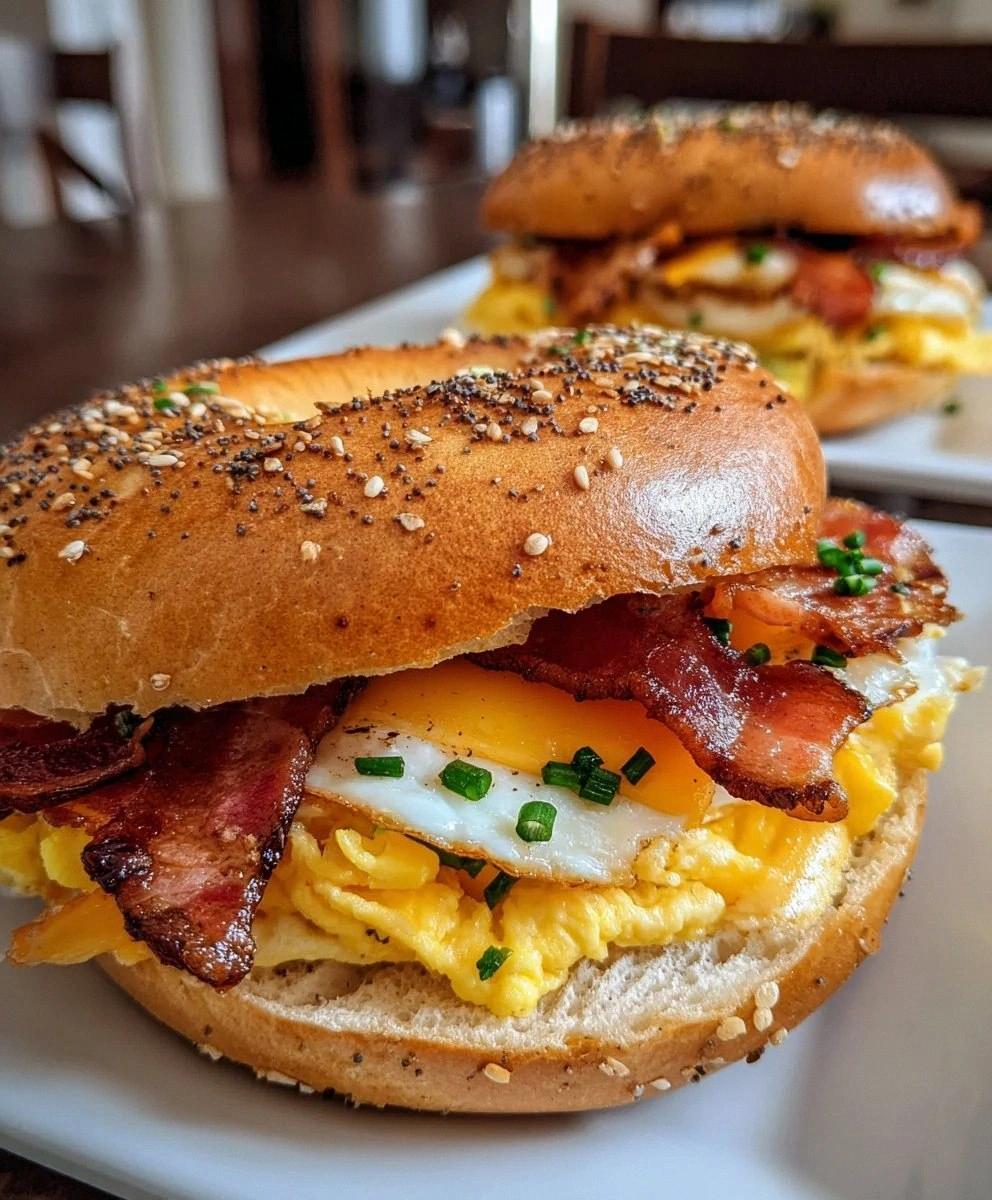
I still remember the morning I burned my third bagel in a row, filling the kitchen with that acrid smoke that clings to your hair and your pride. My roommate shuffled in, took one look at my blackened everything bagel and muttered, "That's not breakfast, that's charcoal therapy." But here's the thing — I don't give up that easily. What started as a quest to stop ruining breakfast turned into three months of obsessive testing, twenty-seven different cream cheese brands, and enough eggs to make a chicken farm jealous. The result? A breakfast bagel sandwich that made my toughest food-critic friend close his eyes and say, "Holy crap, this is what mornings are supposed to taste like." The edges of the bacon caramelize like a candy shell, the egg yolk runs like liquid gold, and everything bagel seasoning gets toasted right into the cream cheese so every bite crackles with garlic and onion and sesame magic. I dare you to taste this and not go back for seconds — I ate half the batch before anyone else got to try it, standing over the stove in my pajamas, dripping yolk on my slippers like some kind of breakfast barbarian.
Picture yourself pulling this out of the oven, the whole kitchen smelling like a New York deli had a baby with a French bakery — everything bagels toasting while bacon fat sizzles and eggs cook low and slow until they're custardy and trembling. The cream cheese melts just enough to get silky, creating this luxurious layer between the crisp bagel and the molten yolk. Most recipes get this completely wrong by cooking everything separately and slapping it together cold. Here's what actually works: you build it hot, layer by layer, so the flavors marry and the textures contrast and the whole thing becomes greater than the sum of its parts. That first bite? It's like your mouth discovers a new primary color. The bagel shatters, the yolk explodes, the bacon snaps, and suddenly you're not someone who eats breakfast — you're someone who experiences it.
I'll be honest — I ate half the batch before anyone else got to try it, and I don't even feel guilty because that's how good this is. My neighbor Maria texted me at 7 AM asking if I was making breakfast again (the smell drifts through our shared wall), and when I brought her one, she ate it in three bites standing in her doorway, curlers still in, and demanded the recipe. That's when I knew I had something special. This isn't just another breakfast sandwich; this is the one that'll ruin all other breakfasts for you, the one your future self will thank you for learning, the one that turns Monday mornings into something you actually anticipate. Stay with me here — this is worth it.
Let me walk you through every single step — by the end, you'll wonder how you ever made it any other way.
What Makes This Version Stand Out
Before we get our hands deliciously dirty, let me tell you why this breakfast bagel sandwich isn't just another recipe floating around the internet. I've tested dozens of versions, from diner-style greasy spoons to fancy restaurant interpretations, and they all miss the mark in ways that seem small but add up to disappointment. This version? It's hands down the best version you'll ever make at home, and here's exactly why.
- The Hot Build Method: Instead of cooking everything separately and assembling cold components, we build this sandwich hot so the cream cheese melts slightly and creates a unified flavor bomb. The difference between cold assembly and hot build is like the difference between a group chat and a dinner party — one works, one creates magic.
- Everything Bagel Seasoning Butter: We don't just toast the bagel — we create a compound butter with everything seasoning that gets brushed on and toasted until it forms a crispy, garlicky crust. It's like giving your bagel a flavor tattoo that penetrates every bite.
- The Two-Temperature Egg Technique: Most people cook eggs at one temperature and end up with either rubbery whites or runny snotty ones. We start hot for crispy edges, then drop the temperature for custardy centers. The yolk stays molten while the whites get those lacy, crispy edges that shatter like thin ice.
- Bacon Weave Architecture: Instead of throwing strips on haphazardly, we create a bacon weave that ensures every bite has the perfect meat-to-egg-to-bagel ratio. No more sad bites of just bread and cheese.
- The Cream Cheese Barrier: We spread cream cheese on both bagel halves, creating a moisture barrier that prevents sogginess while adding a tangy richness that cuts through the fatty bacon and yolk.
- Make-Ahead Components: The everything seasoning butter keeps for two weeks, and you can pre-cook bacon weave sheets that reheat in 90 seconds. Weekday mornings just got dangerous.
Alright, let's break down exactly what goes into this masterpiece, because understanding your ingredients is what separates breakfast champions from breakfast chumps.
Inside the Ingredient List
Great cooking starts with understanding what each component brings to the party, and this breakfast bagel sandwich is like a carefully orchestrated symphony where every ingredient has a solo moment and a supporting role. I've tested this with cheap bagels and artisanal ones, thick-cut bacon and regular, every type of cream cheese from the tub to the brick. Here's what actually matters and why.
The Foundation: Bagels and Why Freshness is Everything
The bagel is your canvas, and using a stale one is like trying to paint on cardboard — technically possible but spiritually wrong. Fresh bagels should have a crust that fights back when you squeeze it, not collapse like a sad balloon. If you're stuck with day-old bagels, revive them by wrapping in a damp paper towel and microwaving for 15 seconds, then toasting immediately. The everything bagel is classic for a reason — those garlicky, oniony bits get extra toasty and create flavor pockets throughout. But here's a secret: plain bagels work better if you're making the everything seasoning butter, because you control the flavor intensity. Sesame bagels add nuttiness, poppy seed ones bring a pleasant bitterness, and salt bagels create a savory bomb that makes the cream cheese taste sweeter by comparison.
The Protein Powerhouse: Eggs and Bacon Selection
Eggs are the divas of this production, and treating them right makes the difference between breakfast bliss and rubbery tragedy. Room temperature eggs cook more evenly, so pull them out when you start brewing coffee. For the yolk porn shot we all secretly want, go with large eggs — extra large whites take longer to set while the yolk overcooks, and medium eggs feel stingy. Bacon thickness matters more than you'd think; thick-cut stays chewy while regular gets crispy, and honestly, you want something in between. Center-cut bacon has less fat so it crisps better and doesn't make your sandwich a slip-n-slide. If you're feeling fancy, peppered bacon adds a nice heat that plays against the cool cream cheese.
The Flavor Carriers: Butter and Seasoning
Unsalted butter lets you control the salt level, which matters because everything seasoning is already salty and bacon brings its own sodium party. European-style butter has less water and more fat, creating better browning and a richer flavor. The everything seasoning isn't just for bagels anymore — when you bloom it in butter, the garlic and onion powders hydrate and release their essential oils, creating an aromatic base that perfumes your whole kitchen. If you can't find everything seasoning, make your own: two parts sesame seeds, two parts poppy seeds, one part dried minced onion, one part dried minced garlic, one part coarse salt, half part black pepper.
The Creamy Counterpoint: Cream Cheese Mastery
Full-fat cream cheese is non-negotiable here — the low-fat stuff has stabilizers that get weird when heated and create a grainy texture that feels like eating flavored sand. Brick cream cheese is firmer and easier to spread on hot bagels without tearing them, while whipped incorporates air that melts faster and creates a lighter mouthfeel. Philadelphia original has the perfect tang, but I've had great results with local creameries that use live cultures. Let it soften for 10 minutes before spreading — cold cream cheese tears warm bagels like wet tissue paper.
Everything's prepped? Good. Let's get into the real action, because this is where the magic happens and I want you right here with me every sizzling second.
The Method — Step by Step
Okay, ready for the game-changer? We're not just making a sandwich here — we're creating layers of hot, melty, crispy perfection that'll make your kitchen smell like breakfast heaven and your taste buds do backflips. This next part? Pure magic. I've broken this down into foolproof steps because I've seen too many good intentions turn into breakfast disasters, and you deserve better than that.
- Create your everything seasoning butter: In a small bowl, combine four tablespoons of softened unsalted butter with two teaspoons of everything bagel seasoning, one teaspoon of minced fresh chives, and a pinch of black pepper. Mash it together with a fork until it's a uniform spreadable consistency. This is your flavor foundation, and making extra means you'll have it ready for next time. The butter should be soft enough to spread but not melted — think toothpaste consistency, not soup. If you go too far and it melts, just pop it in the fridge for five minutes to firm up.
- Weave your bacon masterpiece: On a sheet of parchment paper, lay out six strips of bacon in parallel lines, then weave six more strips perpendicular, creating a lattice that ensures every bite has perfect bacon distribution. This isn't just for Instagram — the weave creates structural integrity so your bacon doesn't slide out in one disappointing strip. The parchment makes it easy to transfer to the pan and catches the rendered fat for basting. If your bacon strips are different lengths, overlap the short ones to create uniform coverage. The weave should be tight enough to hold together but loose enough to get crispy.
- Start the bacon in a cold pan: Place your bacon weave in a cold cast iron skillet, then turn the heat to medium. Starting cold renders the fat slowly, creating crispy edges without burning. Don't walk away from the stove here — bacon goes from perfect to charcoal faster than a New York minute. After about five minutes, you'll see the edges start to curl and the fat begin to pool. That's when you know it's working. The low slow start means the fat renders out, leaving you with crispy bacon that's not greasy.
- Flip and finish the bacon: After 8-10 minutes when the first side is golden and crispy, carefully flip the entire weave using two spatulas. The goal is to keep it intact while getting both sides crispy. Cook another 3-4 minutes until the second side matches the first. Transfer to a paper towel-lined plate to drain, but don't pat the top — you want to keep those crispy edges intact. The bacon will crisp further as it cools, so pull it when it's just shy of your desired doneness.
- Toast your bagels with the everything butter: Split your bagels and spread a generous layer of the everything seasoning butter on the cut sides. In the same skillet (don't wipe it out — those bacon bits add flavor), toast the bagels butter-side down over medium heat. This is where the magic happens: the butter melts into the bagel, the everything seasoning toasts and releases aromatics, and the bottom gets crispy while the top stays chewy. Watch closely — the line between toasted and burnt is thinner than your patience on a Monday morning. You're looking for golden edges and a toasted aroma that makes your stomach growl.
- Master the two-temperature egg technique: Reduce the heat to medium-low and add a teaspoon of that bacon fat back to the pan. Crack your room-temperature eggs into the pan, then immediately drop the heat to low. This is the moment of truth — high heat creates rubbery whites and green-tinged yolks, but too low and you'll be there until lunch. The perfect temperature creates lacy edges while keeping the yolk molten. After 30 seconds, add a tablespoon of water to the pan and cover with a lid. The steam creates a perfect white while keeping the yolk runny — it's like a basted egg without the flipping drama.
- Time the cheese melt: When the whites are almost set but the yolk still jiggles when you shake the pan, it's time for cheese. Place a slice of sharp cheddar or havarti on each egg and cover again for 30 seconds. The cheese should melt into a blanket that hugs the egg without overcooking the yolk. If you're making multiple sandwiches, keep the eggs moving — push them around the pan so they don't stick and the cheese melts evenly. The goal is cheese that's melted but not greasy, creating a velvety layer between egg and bagel.
- Assemble while everything's hot: This is where most recipes fail — they let everything cool before assembly. Work fast: spread cream cheese on the bottom bagel half while it's still warm so it melts slightly. Add your bacon weave, breaking it to fit if needed. Slide your cheese-covered egg on top, then add the top bagel half. Press down gently — you want to compress slightly so everything sticks together, but not so hard that you break the yolk. The heat from the egg and bagel will warm the cream cheese, creating a unified sandwich instead of distinct cold and hot layers.
- The crucial rest and cut: Here's where patience pays off — let the sandwich rest for exactly 60 seconds. This allows the cream cheese to warm and create a moisture barrier, the cheese to set slightly so it doesn't all squeeze out, and the yolk to stabilize so it doesn't explode when you cut it. Use a sharp knife to cut in half, revealing that perfect cross-section that makes Instagram weep with joy. The cut should be clean, showing distinct layers that hold together instead of sliding apart into a tragic breakfast landslide.
That's it — you did it. But hold on, I've got a few more tricks that'll take this to another level, because good enough isn't in my vocabulary when it comes to breakfast.
Insider Tricks for Flawless Results
Here are the secrets that separate the breakfast rookies from the breakfast rockstars. These aren't nice-to-haves — they're game-changers that'll make your sandwiches so good, people will start making excuses to sleep over. A friend tried skipping the temperature rule once — let's just say it didn't end well, and she still texts me photos of her perfectly cooked eggs every weekend.
The Temperature Rule Nobody Follows
Your pan temperature is everything — literally everything. Too hot and your eggs bounce like rubber balls, too cool and they weep like a disappointed parent. The pan is ready when a drop of water sizzles but doesn't dance across the surface like a hyperactive toddler. If you've ever struggled with rubbery eggs, you're not alone — and I've got the fix. After adding eggs, the pan should be hot enough that you hear a gentle sizzle, but not so hot that the edges immediately start to brown. Think of it as a conversation, not an argument — the eggs should cook slowly enough to stay tender but fast enough that you're not late for work.
Why Your Nose Knows Best
Don't trust your eyes alone — your nose is the ultimate kitchen timer. When the everything seasoning butter hits the pan, you should smell garlic and onion first, then sesame as it toasts. If you smell burning, you've gone too far. The bacon is ready when your kitchen smells like a campfire made of meat — rich and smoky but not acrid. Eggs are done when they smell like, well, nothing — overcooked eggs have a sulfur stench that'll ruin your appetite faster than a dentist appointment. Trust the aromatics; they're telling you a story if you learn to listen.
The 5-Minute Rest That Changes Everything
Here's a confession — I used to eat these sandwiches immediately and wondered why they fell apart. Then I discovered the power of the rest. After assembling, wrap your sandwich in foil for exactly five minutes. The steam softens the bagel just enough to make it easier to eat while the flavors meld into something greater than their parts. The cream cheese warms and creates a unified sauce, the cheese sets so it doesn't slide out, and the whole thing becomes a cohesive unit instead of a precarious stack. It's like letting wine breathe, but for breakfast.
The Cream Cheese Temperature Trick
Cold cream cheese on hot bagels is like putting ice on a burn — it creates shock and separation. Let your cream cheese sit out while everything else cooks — just 10 minutes makes it spreadable without getting soupy. But here's the genius part: spread it on the hot bagel immediately after toasting. The residual heat warms it just enough to create a smooth layer that bonds with the bread instead of sitting on top like a cold, stubborn blob. The difference is night and day — warm cream cheese becomes part of the sandwich architecture instead of a separate, cold component that fights against harmony.
Creative Twists and Variations
This recipe is a playground. Here are some of my favorite ways to switch things up — each one creates a completely different breakfast experience while keeping the core technique intact. I've made these for brunches, for hangover cures, for romantic mornings when I wanted to impress someone without seeming like I was trying too hard.
The Smoked Salmon Deluxe
Swap the bacon for cold-smoked salmon added after cooking, use herb cream cheese instead of plain, and add thinly sliced red onion and capers. The hot egg and toasted bagel create a beautiful temperature contrast with the cool salmon, and the capers add pops of briny brightness that cut through the richness. This version feels fancy enough for a bridal shower but comes together in the same time as the original. The everything seasoning butter still works here — it complements the salmon instead of competing with it.
The Vegetarian Powerhouse
Replace bacon with roasted portobello mushrooms that have been marinated in soy sauce and smoked paprika, creating umami bombs that satisfy even carnivores. Add avocado slices for creaminess and a sprinkle of nutritional yeast for cheesy, nutty flavor without the dairy. The everything seasoning butter gets an upgrade with lemon zest that brightens the whole affair. Even my bacon-obsessed brother requests this version — the mushrooms get crispy edges that mimic bacon's texture while bringing their own earthy depth.
The Breakfast Burrito Bagel
Scramble the eggs with diced peppers and onions, add pepper jack cheese instead of cheddar, and include a smear of refried beans on the bottom bagel half. Top with salsa and fresh cilantro for a breakfast that bridges the gap between bagel shop and taco truck. The everything seasoning butter gets mixed with a pinch of cumin and chili powder, turning your breakfast into a fiesta. This version travels well — wrap it in foil and you've got breakfast for the commute that doesn't require a fork.
The Sweet and Savory Dream
Use a cinnamon raisin bagel (trust me here), keep the everything butter but add a thin layer of fig jam on the top half. The combination of sweet, spicy, and savory creates a flavor profile that tastes like someone took your favorite brunch and turned it into a sandwich. The cream cheese gets mixed with a touch of honey, and the bacon gets a maple glaze in the last minute of cooking. It's like breakfast and dessert had a beautiful baby, and that baby got all the best genes from both sides.
The Hangover Helper
Add a slice of tomato seasoned with salt and pepper, use extra bacon (because you need it), and include a few dashes of hot sauce in the cream cheese. The acidity from the tomato cuts through the fat, the extra bacon provides the salt your body is craving, and the hot sauce gets your metabolism moving again. Serve with a side of hash browns and you'll be human again in no time. This version has saved more Sunday mornings than I can count.
The Fancy Pants Edition
Use brioche bagels if you can find them, swap regular bacon for pancetta, and use brie instead of cheddar. Add a few leaves of arugula dressed with lemon juice for peppery bite that cuts through all the richness. The everything seasoning butter gets mixed with truffle salt for an extra layer of luxury. This version says "I love you" or "I'm sorry" or "I got promoted" — it's celebration food that happens to be breakfast.
Storing and Bringing It Back to Life
Okay, real talk — these sandwiches are best fresh, but life happens and sometimes you need to make ahead or save leftovers. I've perfected the art of the breakfast sandwich resurrection because wasting food makes me sadder than a empty coffee pot.
Fridge Storage
Wrap cooled sandwiches individually in parchment paper, then in foil, and refrigerate for up to three days. The key is cooling them completely first — wrapping hot sandwiches creates condensation that turns your crispy bacon into rubbery sadness. Store the components separately if possible: keep the bacon weave in one container, eggs in another, and assembled sandwiches only if you must. The cream cheese acts as a moisture barrier that actually helps prevent sogginess, so these keep better than you'd expect. Just don't add fresh vegetables until reheating or they'll wilt into disappointment.
Freezer Friendly
These sandwiches freeze beautifully for up to two months, making them perfect for meal prep Sundays. Wrap each sandwich in parchment, then in foil, and finally in a freezer bag — the triple wrap prevents freezer burn that can turn your breakfast into a hockey puck. Freeze them assembled but without cheese on top — add fresh cheese during reheating for optimal meltiness. Label with the date because frozen breakfast sandwiches have a way of becoming mysterious archaeological finds. The everything seasoning butter actually intensifies in flavor during freezing, so your future self gets an even better sandwich.
Best Reheating Method
Oven or toaster oven is your friend here — 350°F for 10-12 minutes from the fridge, wrapped in foil to prevent drying out. Add a tiny splash of water before reheating — it steams back to perfection and revives the bagel's chewiness without making it soggy. The microwave works in a pinch, but wrap in a damp paper towel and heat for 30-second bursts to prevent rubbery eggs. For frozen sandwiches, thaw overnight in the fridge first, then reheat as above. Never reheat with the microwave alone — you'll end up with a rubber ball where your egg used to be. If you have an air fryer, 3-4 minutes at 350°F gives you crispy edges and melty centers that taste almost fresh.