It started with a kitchen catastrophe that I still laugh about every time I think about this gumbo. I was trying to impress a friend with a “Cajun” dish, but the roux turned into a dark, stubborn paste that clung to the pot like a bad habit. I had to salvage the batch by adding a splash of broth, a pinch of salt, and a lot of patience. The result was a smoky, spicy stew that made the house smell like a Louisiana bayou on a summer night. That disaster taught me one crucial lesson: a gumbo is only as good as its foundation, and the foundation is a roux that sings, not a burnt lump that moans. Now I’m excited to share the exact version that turned my kitchen mishap into a culinary triumph.
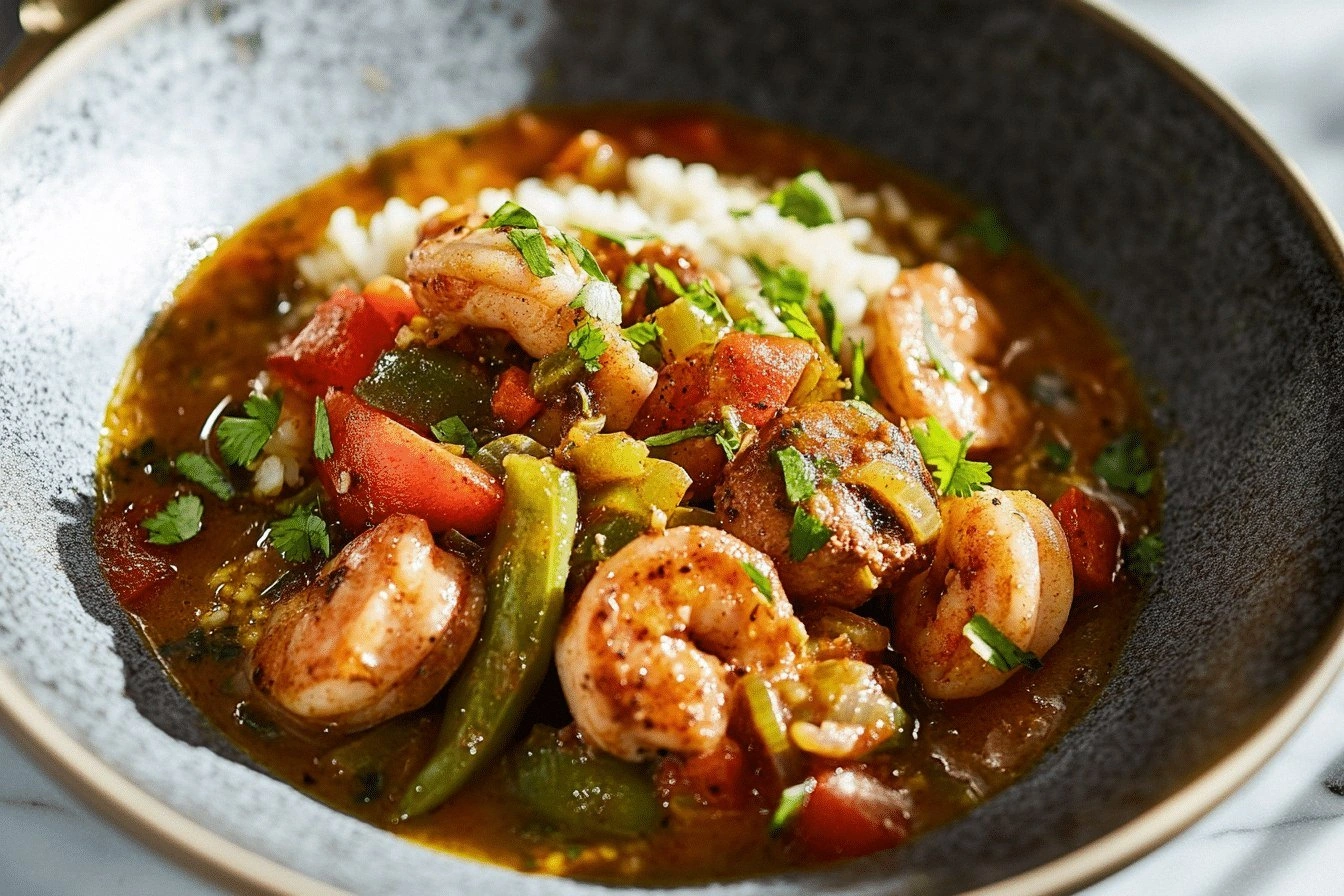
Picture this: the air is thick with the aroma of sautéed onions, celery, and bell pepper, the classic “holy trinity.” The sound of the roux bubbling is like a low, steady drumbeat that signals the heart of the dish. The first spoonful hits your tongue with a smoky heat that lingers, followed by the briny punch of shrimp and the earthy bite of okra. The texture is a beautiful contrast—smooth broth, tender meat, and a slight snap from the okra. The colors are vibrant: deep reds from the peppers, bright greens from the okra, and a golden swirl from the roux. The anticipation builds, and you can almost hear the bayou’s distant call.
What makes this gumbo stand out is that it refuses to be a generic recipe. I’ve taken the classic elements and amplified them: a darker roux for depth, a splash of tomato for subtle sweetness, and a secret blend of spices that delivers a punch without overwhelming the palate. The result is a dish that feels both authentic and bold, with layers of flavor that evolve with each spoonful. The sauce coats the rice like velvet, and the meat stays moist while the okra remains crisp enough to crack like thin ice. My version has a finish that’s both comforting and daring, a rare combination that you’ll keep coming back for.
There’s a twist you won’t expect: I add a touch of dark beer to the roux, which adds a subtle malty undertone that pairs beautifully with the cayenne. This small change turns a standard gumbo into a conversation starter, and it’s the secret ingredient that makes me dare anyone to taste it and not go back for seconds. I’ll be honest—once I tasted the first batch, I ate half before anyone else could even touch the spoon. That moment of triumph is what I want to share with you, so you can experience the same euphoria in your own kitchen.
What Makes This Version Stand Out
- Depth: The roux is cooked until it reaches a dark chocolate hue, giving the gumbo a rich, nutty flavor that lingers long after the last bite. This depth is the difference between a good gumbo and a memorable one.
- Balance: The blend of paprika, cayenne, and thyme is carefully measured so that heat doesn’t overpower the savory undertones of the sausage and shrimp.
- Texture: The okra is sliced thinly to maintain a slight crunch, preventing it from becoming mushy and ensuring every mouthful has a satisfying bite.
- Authenticity: I use real andouille sausage, which brings that unmistakable smoky flavor that is essential to any genuine Cajun gumbo.
- Make‑ahead: This gumbo can be prepared the day before; the flavors actually deepen, making it perfect for a busy weeknight.
- Visual Appeal: The color contrast between the dark roux, bright vegetables, and pink shrimp makes the dish as pleasing to the eye as it is to the palate.
- Versatility: It’s a solid base that can accommodate seafood, chicken, or even a vegetarian version without losing its soul.
- Crowd‑Pleaser: Friends always ask for seconds, and I dare you to taste this and not go back for more.
Inside the Ingredient List
The Flavor Base
Onions, celery, and bell pepper are the holy trinity of Cajun cooking. They provide a foundational sweetness and aromatic backbone that balances the heat. If you’re missing any of these, substitute with a mix of carrot and parsnip for a sweeter profile. The key is to dice them finely so they release their juices evenly.
Garlic is essential for depth. I use minced garlic rather than cloves to distribute the flavor evenly. If you’re allergic, garlic powder can work, but be cautious—use only half the amount to avoid bitterness.
Tomatoes add a subtle acidity that brightens the dish. I use crushed tomatoes, which keep the texture light. A pinch of sugar can counteract any tomato bitterness, but only a small amount to keep the gumbo natural.
The Texture Crew
Andouille sausage is the star that gives the gumbo its unmistakable smoky flavor. Slice it into 1/4-inch rounds for even cooking. If you can’t find it, use smoked sausage or a mix of smoked pork and beef.
Shrimp brings a sweet, briny bite that balances the heat. I keep the shells on for extra flavor, but you can remove them for a cleaner texture. If shrimp are out of season, scallops or firm fish can be a suitable alternative.
Okra is the traditional thickener and adds a unique snap. Slice it thinly so it doesn’t become overly mushy. If you’re not a fan of okra, you can substitute with diced carrots or zucchini, but the texture will change.
The Unexpected Star
Dark beer is the secret ingredient that adds a subtle malty depth. I use a stout or porter, which gives a caramel-like sweetness. If you prefer a non-alcoholic option, replace it with a splash of coffee or a small amount of molasses.
Bay leaves and thyme provide herbal undertones that complement the spice blend. Use fresh thyme for a brighter flavor, or dried if fresh isn’t available. Remove the bay leaves before serving; they’re not meant to be eaten.
The Final Flourish
Fresh parsley or green onions are tossed in at the very end for a burst of color and freshness. They cut through the richness and add a bright, herbal note. If you’re looking for a different finish, consider a sprinkle of chopped cilantro for a citrusy twist.
Rice is the perfect vehicle for the gumbo’s flavors. I use long‑grain white rice, but brown rice or quinoa can be used for a healthier version. Cook the rice separately to avoid it becoming mushy in the stew.
Everything’s prepped? Good. Let’s get into the real action.
The Method — Step by Step
- Start by making a dark roux: melt 2 Tbsp butter in a heavy pot over medium heat. Stir in 2 Tbsp flour and keep cooking, stirring constantly, until the mixture turns a deep mahogany brown—about 15 minutes. This slow cooking process develops a nutty flavor that’s the backbone of the gumbo. Watch the color; when it’s just shy of chocolate, it’s ready. Don’t rush—patience here is the secret to depth. This is the moment of truth.
- Add the holy trinity—1 cup chopped onion, 1 cup chopped celery, and 1 cup chopped bell pepper—to the roux. Sauté until the vegetables soften and the onions become translucent, about 8 minutes. The aromatics will release their sugars, creating a subtle sweetness that balances the heat. Keep stirring to prevent sticking. The mixture should smell toasty, like a campfire on a summer night. This step builds the flavor foundation.
- Stir in 3 cloves minced garlic, 1 tsp paprika, 1 tsp cayenne, and 1 tsp dried thyme. Cook for 2 minutes until the spices bloom. The garlic will release a warm aroma that permeates the pot. The spices should look like they’re dancing in the air. This is where the gumbo starts to sing. If you’re feeling adventurous, add a pinch of dried oregano for a Mediterranean twist.
- Pour in 2 cups low‑sodium chicken broth and stir to combine. Bring the mixture to a gentle simmer. Add 1 bay leaf and 1 Tbsp crushed tomatoes. Let it simmer for 15 minutes, allowing the flavors to meld. The broth should thicken slightly, coating the back of a spoon. This simmer is crucial for developing the gumbo’s signature body.
- Add 1 lb sliced andouille sausage and 1 lb peeled shrimp. Stir gently to coat the meat with the sauce. Cook for 8 minutes, or until the shrimp turn pink and the sausage is heated through. The shrimp should not overcook; it will become rubbery if left too long. Keep the pot partially covered to prevent splattering. This step is where the gumbo gets its protein punch.
- Add 1/2 cup sliced okra and 1 Tbsp dark beer (from the oven). Stir and let the gumbo simmer for another 5 minutes. The okra should be tender but still retain a slight snap. This final simmer allows the beer to caramelize, adding depth. Taste and adjust seasoning—add salt or pepper as needed. The gumbo should be rich, spicy, and aromatic.
- Remove the bay leaf, sprinkle fresh parsley or green onions, and serve hot over a bed of fluffy white rice. The rice soaks up the sauce, creating a comforting, satisfying meal. Let each spoonful carry the smoky, spicy, and slightly sweet notes that define this gumbo. The final dish should feel like a hug from the bayou.
That’s it—you did it. But hold on, I’ve got a few more tricks that will elevate this gumbo to a whole new level.
Insider Tricks for Flawless Results
The Temperature Rule Nobody Follows
Maintain a low, steady simmer throughout the cooking process. A rolling boil will break the roux’s structure and create a watery gumbo. I’ve seen even seasoned cooks let the pot boil, resulting in a thin, flavorless broth. Keep the heat low and stir frequently to preserve the sauce’s thickness. This simple adjustment ensures a silky, cohesive texture.
Why Your Nose Knows Best
Before adding the shrimp, let the gumbo sit for a minute. The aroma will intensify, revealing any off‑notes. If the smell feels off, taste a small spoonful—if it tastes too salty or too bitter, adjust immediately. My friend once skipped this step and ended up with a dish that tasted like burnt onions. Trust your nose; it’s the best seasoning guide.
The 5‑Minute Rest That Changes Everything
After cooking, let the gumbo rest for 5 minutes off the heat. This allows the flavors to marry and the roux to thicken slightly. During this rest, the shrimp’s juices redistribute, making each bite succulent. I’ve found that a short rest improves the overall mouthfeel and depth.
Use Fresh Sausage, Not Frozen
Frozen sausage can release excess water, diluting the gumbo’s flavor. I always buy fresh andouille from a reputable butcher. If you must use frozen, thaw it in the fridge overnight and pat it dry before slicing. This keeps the gumbo from becoming watery and maintains its robust taste.
Serve with a Side of Cornbread
While not traditional, a slice of warm cornbread complements the gumbo’s spices. The sweetness of the cornbread balances the heat and adds a comforting texture. I usually serve a small slice on the side, allowing diners to dip their spoonfuls into the crumb. This pairing is a crowd‑pleaser and adds a Southern twist.
Creative Twists and Variations
This recipe is a playground. Here are some of my favorite ways to switch things up:
Seafood Splash
Swap out the shrimp for a mix of scallops and crab legs. The sweet, delicate flavors of seafood pair beautifully with the smoky base. This variation is ideal for a special occasion or a fancy dinner party.
Vegetarian Vibe
Replace the sausage and shrimp with a hearty mix of mushrooms, zucchini, and sweet potatoes. Add a splash of soy sauce for umami. The result is a plant‑based gumbo that still delivers a complex flavor profile.
Smoky Chipotle
Introduce chipotle in adobo sauce for an extra smoky heat. This adds a deep, earthy flavor that complements the paprika and cayenne. Serve with a side of cilantro lime rice for a fresh contrast.
Spicy Cajun Chicken
Use diced chicken breast instead of sausage, and coat it in a Cajun spice rub before browning. The chicken’s mildness allows the spices to shine. This version is lighter but still full of flavor.
Black Bean & Corn Gumbo
Add a cup of black beans and a cup of corn kernels for a hearty, earthy twist. The beans absorb the sauce, creating a thick, comforting stew. This variation is perfect for a quick weeknight dinner.
Storing and Bringing It Back to Life
Fridge Storage
Cool the gumbo to room temperature, then transfer it to an airtight container. Store in the refrigerator for up to 4 days. When reheating, add a splash of water or broth to restore moisture. Stir gently to redistribute the roux.
Freezer Friendly
Cool the gumbo completely, then portion into freezer‑safe containers. Freeze for up to 3 months. Thaw overnight in the refrigerator before reheating. The texture remains smooth, and the flavors stay intact.
Best Reheating Method
Reheat over low heat on the stove, stirring frequently. Add a small amount of water or broth to loosen the sauce. Heat until steaming but not boiling. This method prevents the roux from separating and keeps the gumbo silky.