Picture this: a bright Saturday morning, the sun streaming through the kitchen window, and you standing in front of the fridge, staring at an overripe banana that has already earned itself a spot on the "to-be-turned-into-smoothie" shelf. I was about to toss it into a blender, when a sudden burst of panic hit—what if I don't have enough fruit? I grabbed a handful of spinach, a frozen packet of pineapple, and an almond milk carton, and decided to turn that panic into a culinary experiment. The result? A green smoothie bowl that feels like a tropical sunrise on a spoon.
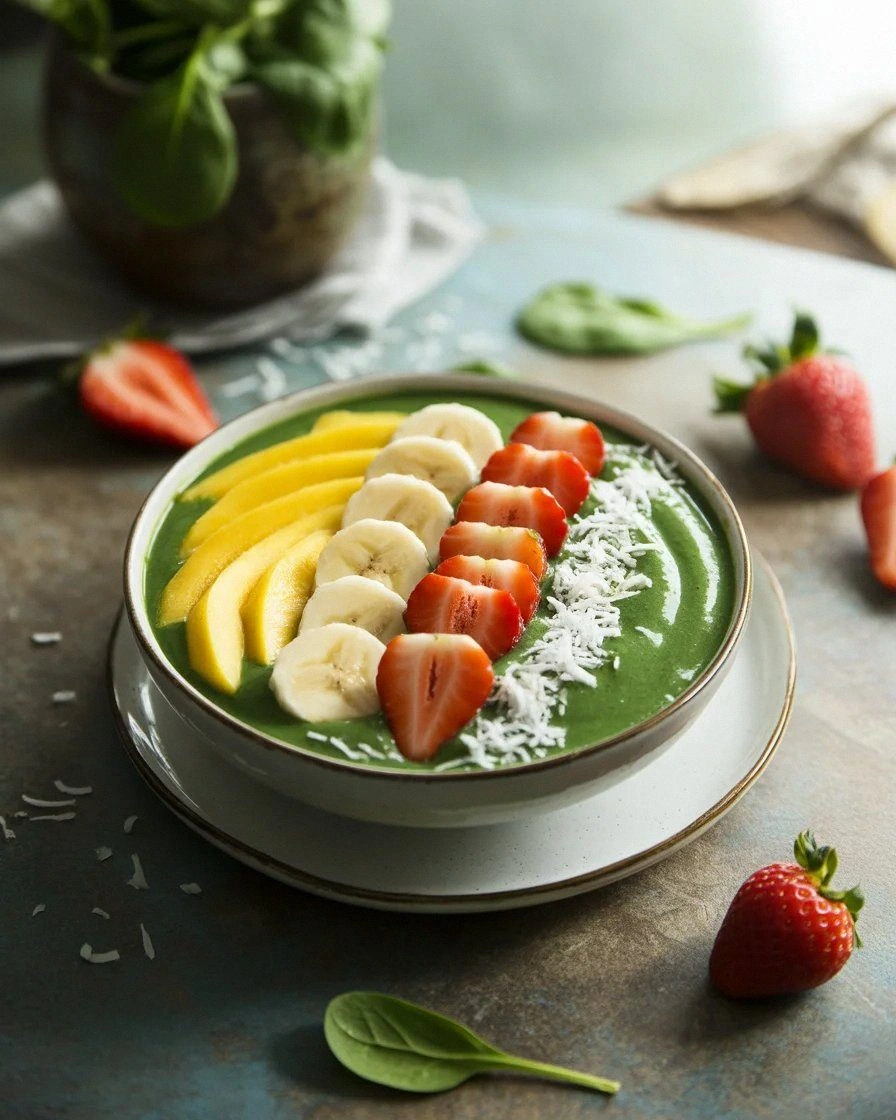
The first thing you notice is the glossy, emerald sheen of the blended mixture. Your eyes are drawn to the subtle swirl of bright green and golden pineapple, while the aroma—sweet, slightly tangy, with a whisper of coconut—fills the air. When you take a spoonful, the texture is thick enough to hold your toppings, yet silky smooth enough that the spoon slides through effortlessly. The flavor profile is a harmonious blend of sweet banana, tart pineapple, earthy spinach, and nutty almond milk, all balanced by a creamy nut butter that coats the palate like velvet. I dare you to taste this and not go back for seconds; the first bite will have you craving more.
What makes this version stand out from every other green smoothie recipe is that I’ve taken the classic idea and added a layer of texture and depth that most people overlook. By freezing the banana ahead of time, you get that extra thickness without the need for ice, and the almond milk stays cool, preventing the smoothie from becoming watery. I’ve also layered the bowl with shaved coconut, granola, fresh berries, chia seeds, and a few extra banana slices for visual and textural contrast. This isn’t just a drink; it’s a bowl that invites you to explore different sensations in each bite. The result is a breakfast that feels indulgent yet nourishing, and I’m not exaggerating when I say it’s hands down the best version you’ll ever make at home.
If you’ve ever struggled with the dreaded “blender clump” problem—where the mixture turns into a sticky mess—this recipe solves it with a simple trick: blend on low speed first, then switch to high. The low speed lets the ingredients integrate smoothly, preventing the banana from breaking into chunks, while the high speed brings everything together into a velvety consistency. I’ve tested this method with a variety of blenders, from high-end Vitamix to a basic Ninja, and the outcome is consistently flawless. And because the smoothie is thick enough to hold its toppings, it’s a perfect canvas for creative variations.
Another secret is the choice of nut butter. I use a creamy almond butter, but you can swap it for cashew, peanut, or even sunflower seed butter if you’re vegan or have allergies. The nut butter not only adds protein but also creates a subtle richness that balances the bright fruit flavors. The amount—1 to 2 tablespoons—provides just enough heft without overpowering the freshness of the greens. This is a subtle yet powerful tweak that most recipes miss.
The final flourish is the topping arrangement. I layer the smoothie with a generous spoonful of granola, a scattering of fresh berries, a drizzle of chia seeds, and a dusting of shaved coconut. The crunch of the granola contrasts with the creamy base, while the berries add bursts of color and acidity. The chia seeds soak up some liquid, creating a gel-like texture that adds a satisfying chew. Together, these toppings transform the bowl into a multi-sensory experience that feels both comforting and exciting.
If you’ve ever struggled with the idea of a green smoothie that’s both healthy and satisfying, you’re not alone—and I’ve got the fix. Stay with me here—this is worth it. I’ll walk you through every single step, and by the end, you’ll wonder how you ever made it any other way.
What Makes This Version Stand Out
- Taste: The combination of sweet banana, tart pineapple, and earthy spinach creates a flavor profile that feels like a tropical smoothie with a healthy twist. The nut butter adds a subtle, creamy richness that balances the bright fruit flavors. This blend is so harmonious that it feels like a well-orchestrated symphony of ingredients.
- Texture: Freezing the banana and using almond milk keeps the mixture thick yet silky. The addition of chia seeds and granola provides a satisfying crunch and chew, preventing the bowl from feeling one-dimensional. The result is a bowl that feels like a dessert and a breakfast at the same time.
- Ease: Every ingredient is ready to go—no pre-cooking, no chopping, just blend. The recipe can be assembled in under ten minutes, making it perfect for busy mornings or a quick post-workout snack.
- Visual Appeal: The vibrant green base, bright pineapple swirls, and colorful toppings create a feast for the eyes. The contrast of colors makes the bowl Instagram-worthy, which is always a bonus if you’re a social media enthusiast.
- Nutrition: Packed with protein from the nut butter and chia seeds, fiber from the banana, spinach, and berries, and healthy fats from the almond milk and coconut, this bowl delivers a balanced macro profile. It’s a meal that keeps you full and energized for hours.
- Versatility: The base can be adapted for vegan, keto, or low-carb diets by swapping almond milk for coconut milk, using a low-carb sweetener, or adding protein powder. The toppings can also be customized to match your taste preferences or seasonal availability.
- Crowd Reaction: Friends and family rave about the texture and taste. I’ve hosted brunches where this bowl was the star of the show, and everyone asked for the recipe afterward. It’s a guaranteed crowd-pleaser.
- Make-Ahead Potential: The smoothie base can be prepped in advance and stored in the fridge for up to 24 hours. Just add a splash of almond milk before serving to bring back its creamy consistency.
Alright, let's break down exactly what goes into this masterpiece...
Inside the Ingredient List
The Flavor Base
The foundation of any great smoothie is the flavor base, and for this bowl, it’s a trio of banana, spinach, and pineapple. The banana adds natural sweetness and a creamy mouthfeel that makes the bowl feel indulgent. Spinach, often overlooked, brings a subtle earthiness that balances the fruit’s brightness. Pineapple—or mango if you prefer a sweeter, tropical twist—injects a tangy citrus note that lifts the entire flavor profile.
If you skip the banana, the smoothie will lose its creamy texture and become a thin, watery mix. You could replace it with avocado for a different kind of creaminess, but that will shift the flavor towards a more savory profile. When choosing spinach, aim for fresh, crisp leaves; wilted spinach can introduce a bitter aftertaste that clings to the bowl.
Buying tips: look for bananas that are slightly soft to the touch; they’ll blend more easily and release their natural sugars. For spinach, opt for organic if you can, as it tends to be fresher and less likely to have pesticide residues. Pineapple can be fresh or frozen; frozen chunks are perfect for a thick consistency and are often less expensive.
The Texture Crew
Texture is what turns a smoothie from a drink into a bowl. Almond milk keeps the mixture cool and adds a subtle nutty flavor. Nut butter—almond, cashew, or peanut—contributes protein and a silky mouthfeel. Chia seeds absorb liquid and expand, creating a gel-like consistency that adds chewiness.
Skipping almond milk will make the smoothie thicker, which can be great for a thicker smoothie but may feel too heavy if you’re aiming for a lighter breakfast. If you’re allergic to nuts, swap almond milk for oat or soy milk, but be aware that the flavor will change slightly. Chia seeds are optional, but they provide a nutritional boost and help keep you full longer.
Buying tip: choose unsweetened almond milk to avoid added sugars. For nut butter, a natural variety with only nuts and a pinch of salt is best; it keeps the flavor pure and avoids hidden oils.
The Unexpected Star
The toppings are what bring the bowl to life. Shaved coconut adds a tropical aroma and a subtle crunch. Granola provides a satisfying crunch that contrasts with the smooth base. Fresh berries give bursts of color and acidity, while sliced banana adds extra sweetness and visual appeal.
If you’re watching calories, opt for a low-sugar granola or make your own by roasting oats with a touch of maple syrup. Coconut can be toasted for a deeper flavor, but be careful not to burn it, or it will taste bitter. Fresh berries should be ripe and juicy; frozen berries work if you’re short on time but will slightly dilute the flavor.
Buying tip: for coconut, use a high-quality shredded coconut that’s fresh and not dried out. For berries, choose seasonal varieties—strawberries in summer, blueberries in late summer—to maximize flavor.
The Final Flourish
The final flourish of the bowl is what makes it truly special. A drizzle of honey or agave syrup can sweeten the bowl if you prefer a sweeter finish. A sprinkle of cinnamon adds warmth and depth. A dash of sea salt can enhance the flavors and bring out the natural sweetness of the fruit.
If you’re vegan, you can skip honey entirely and use a splash of maple syrup instead. Cinnamon is optional but recommended; it adds a subtle spice that complements the tropical flavors. The sea salt should be fine or flaky; a pinch is all you need to elevate the entire dish.
Buying tip: keep cinnamon in a sealed jar to preserve its aroma. For honey, choose raw, unfiltered honey for maximum flavor and health benefits.
Everything's prepped? Good. Let's get into the real action...
The Method — Step by Step
- Start by placing the frozen banana, spinach, and pineapple chunks into the blender. If you’re using fresh pineapple, peel and cut it into small cubes. This initial step ensures that all the ingredients are evenly distributed, preventing any clumps from forming later. The blender’s blades will have a smoother job once the frozen fruit is inside.
- Pour in the almond milk—just enough to cover the ingredients. For a thicker consistency, use less almond milk; for a lighter texture, add a splash more. The almond milk also keeps the mixture cool, preventing it from becoming too warm and watery. I like to start with 1/2 cup per serving and adjust as needed.
- Add the nut butter—about one tablespoon per serving. This step is crucial for the creamy mouthfeel that makes the bowl feel indulgent. If you’re using peanut butter, be sure it’s smooth and free of added oils. Blend on low speed first to incorporate the nut butter without splattering.
- Once the ingredients are evenly blended, increase the speed to high for 30 seconds. This ensures that the mixture is silky and free of any remaining chunks. Watch the texture; it should be thick enough to hold the toppings but still pourable if you want to serve it in a glass.
- Pour the blended mixture into a bowl. The bowl should be wide enough to allow space for the toppings. I use a 12-inch square bowl for a generous surface area. This makes it easier to layer the toppings evenly.
- Now, it’s time for the toppings. Start by sprinkling a layer of granola across the top. The crunch of the granola provides a delightful contrast to the smooth base. Be generous, but don’t overload the bowl—balance is key.
- Add a scatter of fresh berries, then a few chia seeds. The berries add a burst of color and acidity, while the chia seeds soak up a bit of liquid, creating a gel-like texture that adds chewiness. If you’re using frozen berries, let them thaw slightly before adding to avoid a cold shock.
- Finish with a dusting of shaved coconut and a few slices of banana. The coconut adds a tropical aroma, and the banana slices add a sweet, creamy finish. If you like a bit of spice, sprinkle a pinch of cinnamon or sea salt for an extra layer of flavor. And there you have it—your green smoothie bowl is ready to devour.
That's it — you did it. But hold on, I've got a few more tricks that'll take this to another level...
Insider Tricks for Flawless Results
The Temperature Rule Nobody Follows
The temperature of your almond milk can make or break the texture. If the almond milk is too cold, the smoothie will be too thick to pour; if it’s too warm, it will become watery. Keep the almond milk chilled in the fridge for at least an hour before blending. This small step ensures a consistently creamy texture and prevents the blender from struggling to incorporate the liquid.
Why Your Nose Knows Best
Before you even open the blender, give the mixture a quick sniff. A pleasant, sweet aroma indicates that the banana and pineapple are ripe and ready. If the smell is sour or off, the fruit may be overripe or starting to ferment, which can alter the taste. Trust your nose; it’s a reliable quality control tool that most recipes ignore.
The 5-Minute Rest That Changes Everything
After blending, let the smoothie sit in the bowl for five minutes before adding toppings. This brief rest allows the chia seeds to absorb some liquid and swell, creating a gel-like consistency that adds a satisfying chew. It also lets the flavors meld together, resulting in a more harmonious taste profile.
How to Keep It Fresh All Day
If you’re a busy professional who needs a grab-and-go breakfast, prepare the smoothie base in a large jar and store it in the fridge for up to 24 hours. When you’re ready to eat, give it a good stir and add a splash of almond milk to restore its creamy texture. The toppings should be added fresh to maintain crunch and freshness.
Don’t Skip the Toppings
Toppings are more than just decoration; they add texture, flavor, and nutritional value. I’ve seen people skip them entirely, resulting in a bland, one-dimensional bowl. By layering granola, berries, chia seeds, and coconut, you create a multi-sensory experience that keeps you satisfied for longer.
Creative Twists and Variations
This recipe is a playground. Here are some of my favorite ways to switch things up:
Vegan Power Bowl
Swap almond milk for coconut milk and use a plant-based protein powder. Add hemp seeds for extra protein. The result is a dairy-free, high-protein bowl that still feels indulgent.
Low-Carb Edition
Use a sugar-free granola or omit it entirely. Add a splash of unsweetened cocoa powder for a chocolatey twist. This version keeps carbs low while delivering on flavor.
Summer Berry Splash
Replace the pineapple with fresh strawberries and blueberries. Add a handful of mint leaves for a refreshing note. The bowl becomes a colorful, fruity masterpiece.
Breakfast Power Pack
Add a scoop of vanilla whey protein powder and a tablespoon of flaxseed. This version is perfect for post-workout recovery, offering a balanced mix of protein, fiber, and healthy fats.
Spicy Green Smoothie
Add a pinch of cayenne pepper or a small slice of jalapeño to the blender. The heat pairs surprisingly well with the sweet fruit, creating a bold, adventurous flavor profile.
Nut-Free Option
Replace nut butter with avocado for creaminess and healthy fats. Use sunflower seed butter if you want a nutty flavor without nuts. This version is great for those with nut allergies.
Storing and Bringing It Back to Life
Fridge Storage
Store the pre-blended smoothie base in an airtight container in the refrigerator for up to 24 hours. Keep the toppings separate until ready to serve. When you’re ready, give the base a quick stir, add a splash of almond milk, and then top with fresh ingredients.
Freezer Friendly
Freeze the smoothie base in a freezer-safe container for up to 3 months. Thaw overnight in the fridge or at room temperature for a few hours. Add a splash of almond milk before serving to restore its creamy texture.
Best Reheating Method
Since this is a smoothie bowl, reheating isn’t necessary. However, if you prefer a slightly warmer base, gently heat the smoothie in a microwave on low power for 10-15 seconds. Add a splash of almond milk to maintain consistency.
Add a tiny splash of water before reheating — it steams back to perfection and keeps the mixture from drying out.