Picture this: I was standing in a cramped kitchen, juggling a pan of sautéed onions and a pot of simmering sauce, when the doorbell rang. A friend, desperate for dessert, knocked at the threshold, eyes wide with anticipation. I knew I had to pull out a showstopper, and my mind raced to the humble apple strudel that had once won my grandmother's heart. This wasn’t just another pastry; it was a portal to childhood memories, a golden promise of comfort in every bite. The moment the scent of cinnamon and apples hit the air, I felt that familiar tug of nostalgia.
That aroma, sweet and slightly tart, wrapped around the room like a warm blanket. The sound of the dough being stretched was a rhythmic hiss, almost like a secret handshake between flour and patience. I could almost taste the buttery layers, each one crisp enough to crackle against the tongue, and the filling that swelled with juicy apple chunks. The texture was a delicate balance: tender yet firm, airy yet dense, like a well‑orchestrated symphony of flavors. And the visual? A golden, flaky crust that shimmers under the oven light, promising a bite that will melt the heart.
But why is this particular recipe my secret weapon? Because it turns a simple apple into a work of culinary art, thanks to a few unconventional tweaks that elevate the classic. I’ve discovered that a splash of lemon juice brightens the sweetness, while a dash of nutmeg adds depth without overpowering. The dough is stretched so thin that it becomes almost translucent, and the egg wash gives it that coveted glossy sheen. I dare you to taste this and not go back for seconds, because each bite is a revelation. Trust me, this is hands down the best version you'll ever make at home.
Now, picture yourself pulling this out of the oven, the whole kitchen smelling incredible, the steam curling like a fragrant cloud. The anticipation is almost tangible, the heat radiating from the freshly baked strudel, and the golden edges crackling softly. I’ve spent countless evenings perfecting this, and I’m ready to share every single step with you. By the end, you’ll wonder how you ever made it any other way. Let me walk you through every single step—by the end, you'll wonder how you ever made it any other way.
What Makes This Version Stand Out
- Flavor: The blend of sweet apples, brown sugar, and a hint of lemon creates a complex, layered taste that feels both nostalgic and fresh. The subtle nutmeg and vanilla elevate the filling without masking the fruit. Each bite delivers a burst of warmth that lingers on the palate.
- Texture: The dough is stretched to a near‑translucent thinness, giving it a delicate, airy feel that crisps up beautifully in the oven. The filling’s apples remain tender yet firm, preventing a mushy mess. The result is a contrast of crisp and chewy that feels like a well‑executed dance.
- Ease: Despite its sophisticated outcome, the recipe requires minimal hands‑on time. The dough can be prepped the night before, and the filling comes together in under ten minutes. Even novice bakers find the process approachable.
- Make‑ahead: The entire strudel can be assembled and frozen before baking, making it an excellent option for holiday gatherings or last‑minute guests. When you’re ready to serve, simply thaw and bake for a quick, impressive dessert.
- Versatility: While the classic apple filling is the star, the recipe’s structure allows for substitutions—pear, cherry, or even a pumpkin twist. The dough itself can be flavored with cardamom or citrus zest for a seasonal variation.
- Presentation: A light dusting of powdered sugar and a drizzle of caramel sauce transform a simple pastry into a showstopper. The golden crust glistens, and the aroma alone can command attention before the first bite.
Inside the Ingredient List
The Flavor Base
The foundation of any great strudel is a buttery, thin dough that can hold the filling without becoming soggy. We use all‑purpose flour, a pinch of salt, a splash of olive oil, and just enough water to bring the dough together. The olive oil adds a subtle fruity note that complements the apple’s tartness, while the salt balances the sweetness. Skipping the oil will result in a dry dough that cracks easily, so keep it in mind.
A small amount of yeast can be added for a slightly airy rise, but it’s optional. If you’re short on time, simply omit it; the dough will still achieve a flaky texture. For those who love a touch of crunch, sprinkle a tablespoon of rolled oats on the surface before baking. This adds a rustic feel and a pleasant chew.
The Texture Crew
The filling is where the magic truly happens. Fresh apples—Granny Smith or Honeycrisp—provide a firm bite that resists turning mushy when baked. We slice them thinly to allow the flavors to meld with the spices. A mixture of granulated and brown sugar balances the apple’s natural tartness with a caramelized sweetness.
Ground cinnamon and a pinch of nutmeg infuse the filling with warmth, while a splash of lemon juice brightens the overall profile. The lemon also helps prevent the apples from browning, keeping the visual appeal intact. Finally, a handful of raisins adds a chewy surprise that contrasts beautifully with the crisp dough.
The Unexpected Star
Ground almonds, a quarter cup, bring a nutty undertone that pairs wonderfully with the apple and spices. They also add a subtle body to the filling, preventing it from becoming too liquid. If you’re allergic or simply prefer a lighter version, substitute with chopped walnuts or omit entirely.
A teaspoon of vanilla extract ties all the flavors together, providing depth that lingers after the first bite. It’s a small addition that makes a big difference, especially when the filling is slightly on the sweeter side. Remember, the key is balance—too much vanilla can overpower the apple’s natural sweetness.
The final flourish is the egg wash—one beaten egg mixed with a tablespoon of water. This gives the strudel a glossy, golden finish that is both appetizing and professional. If you’re vegan, a splash of aquafaba can replace the egg, but the color may be slightly less vibrant. Dusting the finished strudel with powdered sugar adds a sweet finish that caramelizes just enough to enhance the aroma.
Everything’s prepped? Good. Let’s get into the real action and start turning dough into deliciousness.
The Method — Step by Step
- Begin by mixing the flour, salt, and olive oil in a large bowl. Gradually add the water, stirring until a sticky dough forms. Knead it for about 5 minutes until it’s smooth and elastic. Cover the bowl with plastic wrap and let it rest for 30 minutes; this relaxes the gluten and makes stretching easier.
- While the dough rests, prepare the filling. Peel, core, and thinly slice the apples into bite‑sized pieces. Toss them in a bowl with granulated and brown sugar, cinnamon, nutmeg, lemon juice, and vanilla. Add the raisins and almonds, then set aside to let the flavors meld for 10 minutes.
- After the dough has rested, roll it out on a lightly floured surface. Aim for a thickness of about 2 mm; the dough should be almost translucent. Use a rolling pin or a pasta machine to achieve uniformity. If the dough sticks, dust it lightly with flour or a touch of oil.
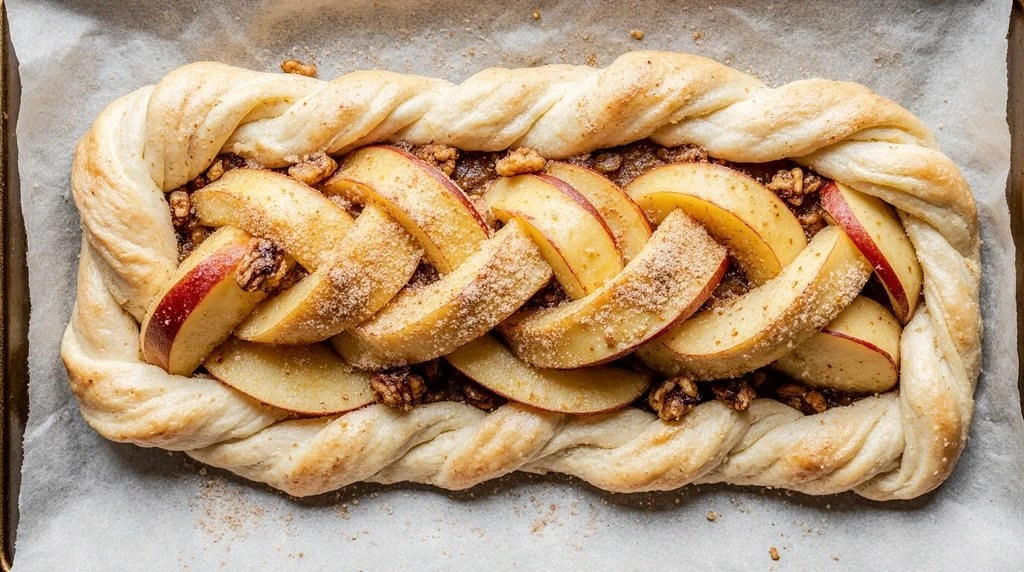
- Spread a thin layer of melted butter across the dough, leaving a 1‑inch border. Spoon the apple filling along the center, spreading it evenly. Fold the sides of the dough over the filling, then roll the whole thing into a tight log, sealing the edges with a little water.
- Place the rolled strudel seam‑side down on a parchment‑lined baking sheet. Brush the top with the egg wash, ensuring an even coat. Sprinkle a pinch of flour over the surface to prevent sticking during baking.
- Preheat the oven to 375°F (190°C). Bake the strudel for 35 minutes, or until the crust turns a deep golden brown. If the edges brown too quickly, cover them loosely with foil to prevent burning.
- Remove the strudel from the oven and let it cool for 10 minutes before slicing. This resting period allows the filling to set and the flavors to meld. Slice with a sharp knife to avoid crushing the delicate layers.
- Dust each slice with powdered sugar, then serve warm or at room temperature. Pair it with vanilla ice cream or a drizzle of caramel sauce for an extra indulgent touch.
Insider Tricks for Flawless Results
The Temperature Rule Nobody Follows
Many bakers set the oven to 400°F, but this can scorch the exterior before the filling cooks. The secret is to bake at 375°F; this lower temperature allows the dough to rise slowly, creating a light, airy crumb. If your oven tends to run hot, set it a few degrees lower and keep an eye on the crust color.
Why Your Nose Knows Best
During the final 10 minutes of baking, the aroma of caramelized sugar will fill your kitchen. This scent is a reliable indicator that the strudel is perfectly done—if the smell is faint, it needs a few more minutes; if it’s overpoweringly sweet, you’re close to over‑baking. Trust your nose; it’s the most accurate thermometer for pastries.
The 5‑Minute Rest That Changes Everything
After baking, let the strudel rest for exactly five minutes on a wire rack. This short pause allows the filling to set, preventing it from sliding off when you slice. I once cut a strudel immediately after removal and the apples fell out like confetti—lesson learned.
Stretching the Dough Like a Pro
If the dough tears while rolling, do not panic. Instead, fold the torn edges back together and press them gently. The dough’s elasticity will re‑unite, and the tear will become invisible once baked. The key is to keep the dough warm and moist during this process.
Balancing Sweetness and Acidity
Too much sugar can mask the apple’s natural flavor, while too little can leave the filling bland. Use the ratio of granulated to brown sugar as a guide—half and half works for most apples. Adjust based on your fruit’s sweetness; sweeter varieties need less sugar.
Finishing with a Glaze
A simple glaze of melted butter and powdered sugar adds a glossy sheen and a subtle sweetness that complements the apple. Whisk the mixture until smooth, then drizzle over the warm strudel. The glaze hardens slightly as it cools, giving a satisfying snap when you bite.
Creative Twists and Variations
Cherry Bliss
Swap apples for tart cherries, adding a splash of kirsch for depth. The cherries provide a bright, juicy contrast to the buttery crust, and the kirsch adds a subtle warmth. This version is perfect for springtime celebrations.
Pumpkin Spice
Replace the apple with pumpkin puree, and sprinkle cinnamon, nutmeg, and ginger into the dough. The result is a comforting autumn dessert that pairs beautifully with a dollop of whipped cream. The pumpkin’s natural sweetness balances the spices.
Chocolate‑Covered
After baking, drizzle melted dark chocolate over the strudel, letting it set. The chocolate’s bittersweet flavor contrasts with the sweet apple filling, creating a multi‑layered taste experience. Sprinkle sea salt on top for a caramel‑salty finish.
Nutty Surprise
Add chopped pecans or walnuts to the filling for an extra crunch. The nuts’ earthy tones complement the apple’s tartness, while their fat content adds richness. This variation is ideal for a cozy, rustic dinner.
Vegan Version
Replace butter with coconut oil in the dough and use aquafaba for the egg wash. Swap dairy milk for oat milk when mixing the dough, and use a plant‑based vanilla extract. The final product remains flaky and flavorful, proving that vegan desserts can be just as indulgent.
Berry Burst
Mix blueberries and raspberries into the apple filling for a burst of color and tartness. The berries soften during baking, releasing a fragrant steam that enhances the aroma. This version is a refreshing change for summer evenings.
Storing and Bringing It Back to Life
Fridge Storage
Wrap the baked strudel tightly in parchment paper, then place it in an airtight container. Store in the refrigerator for up to three days. When ready to serve, let it sit at room temperature for 15 minutes to soften before slicing.
Freezer Friendly
Wrap the strudel in plastic wrap, then aluminum foil, and place it in the freezer for up to two months. To thaw, let it sit at room temperature overnight. This method preserves the flaky crust and juicy filling.
Best Reheating Method
Reheat frozen or refrigerated strudel in a preheated oven at 350°F (175°C) for 10–12 minutes. Add a splash of water to the bottom of the baking sheet to create steam, keeping the pastry moist. Finish with a light dusting of powdered sugar for a fresh finish.