I still remember the first time I attempted moussaka. It was a rainy Tuesday, the kind that makes you want to crawl under a blanket and never come out. I’d eaten it once at a tiny taverna in Athens where the owner, a woman who looked like she’d been born holding a wooden spoon, served me a square so perfect it could’ve been a museum piece. I came home determined to recreate it, armed with nothing but enthusiasm and a vague memory of cinnamon in the meat. What followed was a comedy of errors: watery eggplant, grainy béchamel, a sauce that tasted like bitter regret. I ate it anyway—standing over the sink, fork in hand, swearing I’d crack the code. Fast-forward three years, a dozen trips to Greece, and more test batches than I care to admit, and I finally have the version that makes my knees weak every single time.
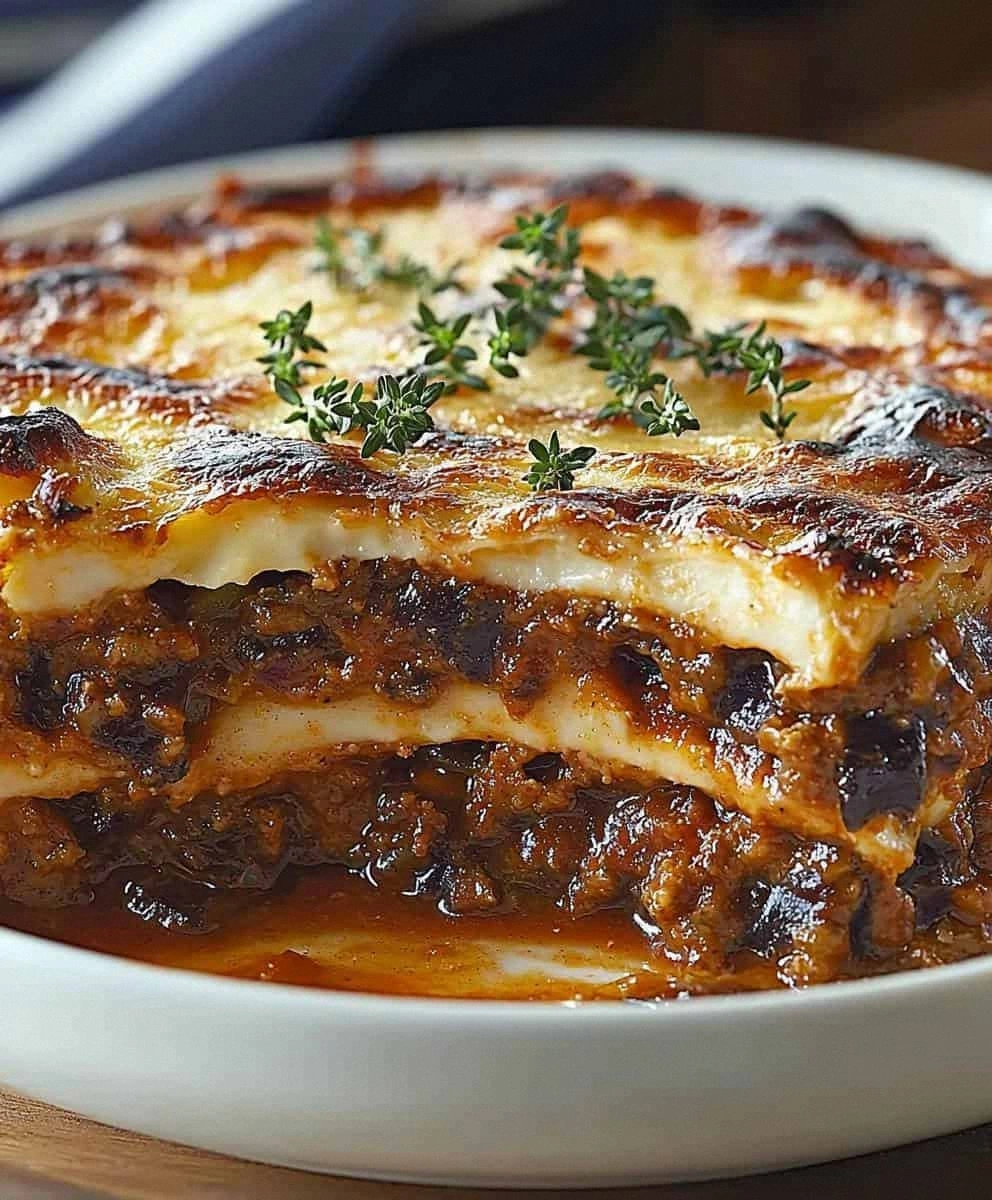
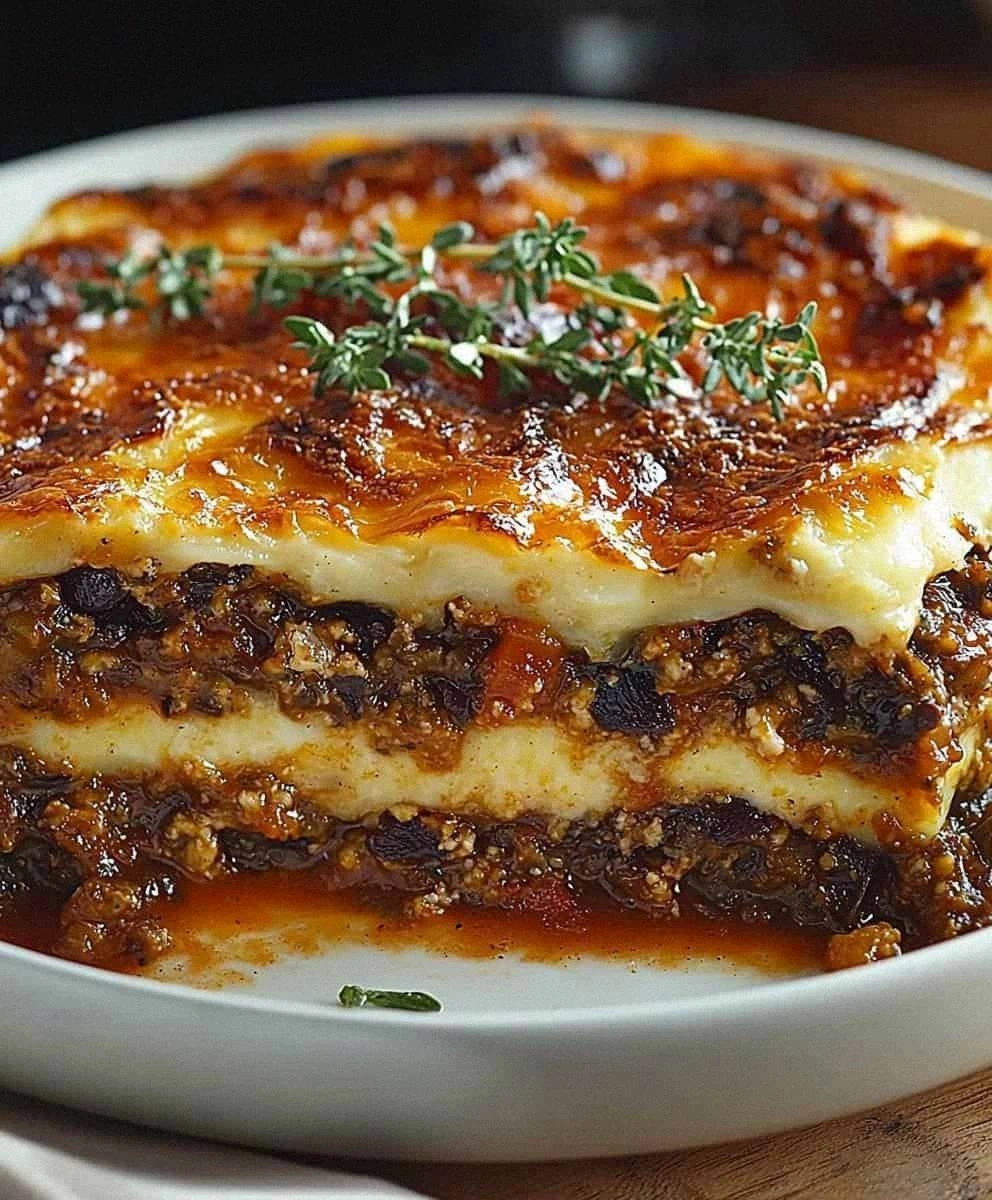
Picture this: layers of silky eggplant, a cinnamon-kissed meat sauce that’s been simmering so long it tastes like Sunday at your grandmother’s, and a béchamel so light it floats off the spoon yet rich enough to make you close your eyes involuntarily. The top bronzes like a sun-kissed island, the edges caramelize into chewy fringes, and when you cut a square the layers hold their line like disciplined soldiers. That first forkful is a warm hug, a taverna on a plate, the edible equivalent of bouzouki music drifting across a moonlit harbor. I dare you to taste this and not go back for seconds; I double-dare you to stop thinking about it the next day.
This moussaka is hands down the best version you’ll ever make at home, and I’m not just saying that because I’m emotionally invested. It’s the recipe I pull out when I need to win hearts, silence critics, or simply feed my own nostalgia. The spices are bold but balanced, the eggplant melts rather than squeaks, and the béchamel—oh, the béchamel—is cloud-light thanks to a sneaky warm-milk trick you’ll never forget. Stay with me here—this is worth every minute, and by the end you’ll wonder how you ever made it any other way.
What Makes This Version Stand Out
- Cinnamon Revelation: Most recipes whisper cinnamon; we let it sing. You’ll taste warmth, not candy, and it turns the tomato sauce into something hauntingly complex.
- Eggplant That Behaves: Salting, pressing, and a quick brush of hot oil transforms rubbery slices into velvety blankets that soak up flavor without turning the dish into soup.
- Two-Cheese Béchamel: Parmesan for nutty depth, a whisper of mozzarella for stretch, plus eggs for structure—think savory custard, not gluey paste.
- Wine in the Sauce: Optional but transformative; it lifts the meat from pedestrian to taverna-worthy. (I’ve used everything from Château Margaux to last Tuesday’s boxed red—both work.)
- Make-Ahead Magic: Assemble the night before, refrigerate, then bake straight from cold—just add ten extra minutes. Flavors meld like old friends catching up.
- Portion Control—Ha! The recipe feeds eight polite people or four honest ones. I’ll be honest—I ate half the batch before anyone else got to try it, and I regret nothing.
Inside the Ingredient List
The Flavor Base
Onion and garlic are the Romeo and Juliet of savory cooking—separately fine, together unstoppable. Dice the onion so small it practically dissolves; this isn’t a rustic stew. Garlic goes in after the onion’s translucent, because burnt garlic is the culinary equivalent of a crying baby on an airplane—impossible to ignore and ruins everyone’s good time.
The Texture Crew
Ground beef brings heft, but swap in lamb if you want to feel like Zeus himself. Lamb’s natural sweetness hugs the cinnamon like they were born for each other. If you’re feeling rebellious, half-and-half gives you the best of both worlds. Whatever you do, don’t buy the lean stuff; fat equals flavor, and we’re not running a spa here.
The Unexpected Star
Nutmeg in béchamel is classic, but go easy—one careless grater-flip and your sauce tastes like Santa’s candle. A quarter-teaspoon is plenty; think of it as perfume, not cologne. The milk must be warm when it hits the roux, or you’ll be whisking until your arm falls off and still end up with sandpaper.
The Final Flourish
Parmesan adds umami depth, mozzarella gives you those Instagram-worthy cheese pulls. Skip the pre-shredded stuff; it’s coated in cellulose that makes the sauce grainy. Buy a block and grate it yourself—consider it an arm workout before the feast.
Everything’s prepped? Good. Let’s get into the real action...
The Method — Step by Step
- Start by laying the eggplant slices on a rack, salting both sides like you’re dusting a snowy road. Let them weep for 30 minutes while you sip something cold and question your life choices. This draws out bitter juices and collapses the cell walls so they’ll later absorb oil like grateful sponges rather than stubborn bricks.
- While the eggplant cries it out, warm olive oil in a heavy pot and tumble in the onion. You want a gentle sizzle, not a frantic pop—think spa music, not heavy metal. When the edges turn translucent and sweet, add the garlic for a quick thirty-second tango before the meat crashes the party.
- Crank the heat to medium-high and add the ground meat, breaking it up with a wooden spoon that’s seen better days. Let it sit undisturbed for two minutes so it browns rather than grays; that caramelized fond on the bottom is liquid gold. Stir only when you hear the sizzle quiet down—patience now equals flavor later.
- Slip in the tomato paste and let it toast for a minute; it will darken from bright circus red to a moody burgundy. That color change means the sugars are developing, turning sharp acidity into rounded sweetness. Pour in the crushed tomatoes, oregano, cinnamon, and wine if using. Reduce the heat until the sauce murmurs like gossip. Simmer uncovered for twenty minutes, stirring occasionally, until a spoon dragged across the bottom leaves a trail that fills in slowly—like watching paint dry, but tastier.
- Pat the eggplant slices dry with paper towels; they should feel supple, not slimy. Brush both sides with olive oil and arrange on a hot grill pan or under a broiler. You’re looking for tiger-stripe char and a creamy interior—about three minutes per side. Resist eating them straight off the pan; I failed this step so you don’t have to.
- Now the béchamel: melt butter in a saucepan until it foams like a cappuccino. Whisk in flour and cook for two minutes; the roux should smell like popcorn, not raw dough. Slowly pour in warm milk while whisking like your life depends on it—lumps are the enemy of greatness. When it thickens enough to coat the back of a spoon, season with nutmeg, salt, and pepper. Off the heat, whisk in eggs and Parmesan; the sauce will gleam like satin.
- Preheat your oven to 375°F (190°C). In a buttered baking dish, layer half the eggplant, overlapping like fish scales. Spread all the meat sauce on top, pressing gently so it settles into every crevice. Add the remaining eggplant, then pour the béchamel over the back of a spoon so it blankets without disturbing the layers. Sprinkle mozzarella if you want those golden freckles.
- Bake for 45 minutes until the top is the color of toasted hazelnuts and the sauce is bubbling up like a lava lamp. Your kitchen will smell like a Greek island in summer; neighbors may appear at your door with empty plates. Let it rest for 15 minutes—yes, it’s torture, but cutting too soon turns the layers into a landslide.
That’s it—you did it. But hold on, I’ve got a few more tricks that’ll take this to another level...
Insider Tricks for Flawless Results
The Temperature Rule Nobody Follows
Everything hot must meet something warm: warm milk into the roux, warm sauce onto warm eggplant, warm dish into a fully preheated oven. Thermal shock equals splits, curdles, and tears at bedtime. If you’re rushing, microwave the milk for thirty seconds; nobody will arrest you.
Why Your Nose Knows Best
When the béchamel is ready, it smells faintly of nutmeg and buttered toast. If you still smell raw flour, keep stirring another minute. A friend tried skipping this step once—let’s just say it didn’t end well, and her dinner guests still refer to it as “the wallpaper-paste incident.”
The 5-Minute Rest That Changes Everything
After baking, tent the dish loosely with foil and walk away for five full minutes. This allows the layers to set so your squares slice like lasagna, not sloppy joe. Use the time to pour yourself a glass of whatever wine survived the sauce.
Creative Twists and Variations
This recipe is a playground. Here are some of my favorite ways to switch things up:
Weeknight Zucchini Swap
Replace half the eggplant with grilled zucchini coins for a lighter, faster version that bakes in 30 minutes. Kids think it’s lasagna; parents know it’s stealth vegetables.
Spicy Florina Pepper Kick
Stir a diced roasted red pepper and a pinch of cayenne into the meat sauce for a northern-Greek vibe that sneaks up on you like plot twist in a novel.
Mushroom Heaven for the Meat-Weary
Use a 50-50 blend of ground beef and finely chopped mushrooms; the umami doubles while the calories politely step back.
Breakfast Moussaka Sandwich
Chill leftovers overnight, then cut into rectangles, dip in egg, and pan-fry until golden. Top with a fried egg and call it brunch—Greeks do it, trust me.
Storing and Bringing It Back to Life
Fridge Storage
Cool completely, then cover tightly with foil or transfer to an airtight glass container. It keeps for up to four days, though good luck making it last that long. The flavors deepen like a good gossip session—better on day two.
Freezer Friendly
Cut into portions, wrap each in plastic and then foil, and freeze for up to three months. Label it or you’ll play freezer roulette in six weeks. Thaw overnight in the fridge for best texture.
Best Reheating Method
Cover with foil and warm at 325°F (160°C) for 20 minutes. Add a tiny splash of water to the pan—it steams back to perfection so the béchamel stays silky, not rubbery. Microwave works in a pinch, but the top will never regain its crackle.