Picture this: I’m standing in a cramped kitchen, the fridge door open like a treasure chest, and a bag of ground beef staring back at me. I had promised myself a quick dinner, but the last thing I wanted was another bland stir‑fry that tasted like a Tuesday. I reached for the pantry, pulled out soy sauce, honey, and rice vinegar, and suddenly the air smelled like an Asian market on a summer night. That moment felt like a dare from a friend: “I dare you to taste this and not go back for seconds.” I decided to trust my instincts and cook something bold.
As the skillet warmed, the sizzle of the beef echoed like applause, and the aroma of garlic and ginger began to dance in the air. The heat turned the onions into translucent pearls, while the honey started to caramelize into a glossy glaze that glistened like liquid gold. I could hear the subtle hiss of the sauce thickening, and I felt the anticipation building in my chest. The sound of the skillet was a soundtrack to a culinary adventure that promised more than just a meal—it promised a story.
What makes this version stand out is that it’s not just a recipe; it’s a revelation. The sauce is a sweet‑savory symphony that coats every grain of rice, the eggs are fluffy, and the chilies bring a kick that lingers without overwhelming the palate. It’s the kind of dish that turns a simple dinner into an experience, a dish that people will remember and ask for again. Most recipes get this completely wrong by over‑cooking the beef or using too much sugar. Here, the balance is perfect, and the result is a bowl that feels like a gourmet feast.
There’s a twist you won’t expect: a splash of rice vinegar to cut through the sweetness, and a dash of fresh chilies that adds a subtle heat. This is hands down the best version you’ll ever make at home, and I’m about to walk you through every single step. By the end, you’ll wonder how you ever made it any other way.
What Makes This Version Stand Out
- Taste: The sauce marries sweet honey, salty soy, and sharp rice vinegar into a glaze that coats the beef like velvet. The result is a complex flavor profile that satisfies every craving. It’s the kind of richness that keeps you reaching for another spoonful.
- Texture: The beef is browned to a caramelized finish while the eggs remain soft and airy. The rice soaks up the sauce, turning each grain into a tender, glossy bite. The contrast between the crispy edges and the molten interior is a delight.
- Simplicity: With only eleven ingredients, you can create a restaurant‑level dish in under an hour. No fancy tools or exotic spices—just pantry staples that you probably already own. It’s the perfect recipe for busy weeknights.
- Uniqueness: The combination of honey and rice vinegar creates a sweet‑savory balance that isn’t found in typical Korean beef bowls. The addition of fresh chilies gives a subtle heat that lingers without overpowering. It’s a fresh take on a classic.
- Crowd Reaction: Friends who tried it said it was “the best Korean beef bowl I’ve ever had.” The dish is so satisfying that it’s often the last thing on the plate. It’s guaranteed to impress even the pickiest eaters.
- Ingredient Quality: Using fresh ground beef, real honey, and freshly sliced chilies elevates the dish. The quality of the ingredients shines through, making each bite a celebration of flavor. It’s a testament to the adage that great food starts with great ingredients.
- Cooking Method: The technique of browning, simmering, and then folding in eggs ensures that every component retains its distinct character. The method is straightforward but yields a dish that feels sophisticated.
- Make‑Ahead Potential: The sauce can be pre‑made and stored for up to three days, making it ideal for meal prep. The beef can be cooked ahead and reheated, preserving flavor and texture. It’s a practical solution for the modern kitchen.
Inside the Ingredient List
The Flavor Base
At the heart of this bowl is the sauce, a blend of soy sauce, honey, and rice vinegar that creates a sweet‑savory glaze. The soy sauce provides umami depth, while the honey brings a natural sweetness that balances the acidity of the vinegar. Together, they form a coating that clings to the beef and rice, ensuring every bite is flavorful. If you skip the honey, the sauce will taste flat and overly salty, so keep it in the mix.
The Texture Crew
The ground beef is the star of the texture crew, browned to a caramelized finish that offers a satisfying chew. The eggs add a fluffy, custard‑like element that softens the bite, while the scallions contribute a crisp freshness. When you stir the eggs into the beef, the mixture becomes a harmonious medley of savory and sweet. If you omit the eggs, the dish will feel dry and less luxurious.
The Unexpected Star
Fresh chilies are the unexpected star that gives the dish its signature heat. They’re sliced thin to distribute heat evenly without overwhelming the palate. The chilies also add a bright, slightly smoky flavor that complements the sweetness of the honey. If you’re not a fan of heat, you can reduce the amount or replace them with a milder pepper.
The Final Flourish
Scallions, toasted sesame seeds, and a drizzle of sesame oil finish the dish with bright, aromatic accents. The scallions bring a subtle oniony crunch, while the sesame oil adds a nutty aroma that elevates the overall flavor. These finishing touches are what transform a simple bowl into a gourmet experience. If you skip the garnish, the dish will still be good, but it won’t have that wow factor.
Everything’s prepped? Good. Let’s get into the real action, and trust me, the first bite will change your perception of Korean beef bowls forever.
The Method — Step by Step
- Heat a large skillet over medium‑high heat. Add the ground beef, breaking it apart with a spatula. Cook until it’s browned and the juices start to evaporate. The sizzle should sound like applause, signaling that the beef is ready.
- Reduce the heat to medium. Add the diced onion, minced garlic, and grated ginger. Sauté until the onion becomes translucent and the mixture releases a fragrant aroma. This step builds the flavor foundation.
- Stir in the soy sauce, honey, and rice vinegar. Bring the mixture to a gentle simmer, allowing the sauce to thicken into a glossy glaze. The sauce should coat the beef like velvet, creating a sweet‑savory sheen.
- Add the fresh chilies, adjusting the heat to your preference. The sauce should still be glossy, but the chilies will introduce a subtle kick. Watch out for splattering; keep a lid nearby if you’re a heat‑averse cook.
- Push the beef mixture to one side of the skillet. Crack the eggs into the empty space and scramble them until just set. The eggs should be fluffy and not overcooked, ensuring they stay tender.
- Fold the scrambled eggs into the beef, letting the flavors mingle. The mixture should be a harmonious medley of savory, sweet, and slightly spicy. This step ensures every bite is balanced.
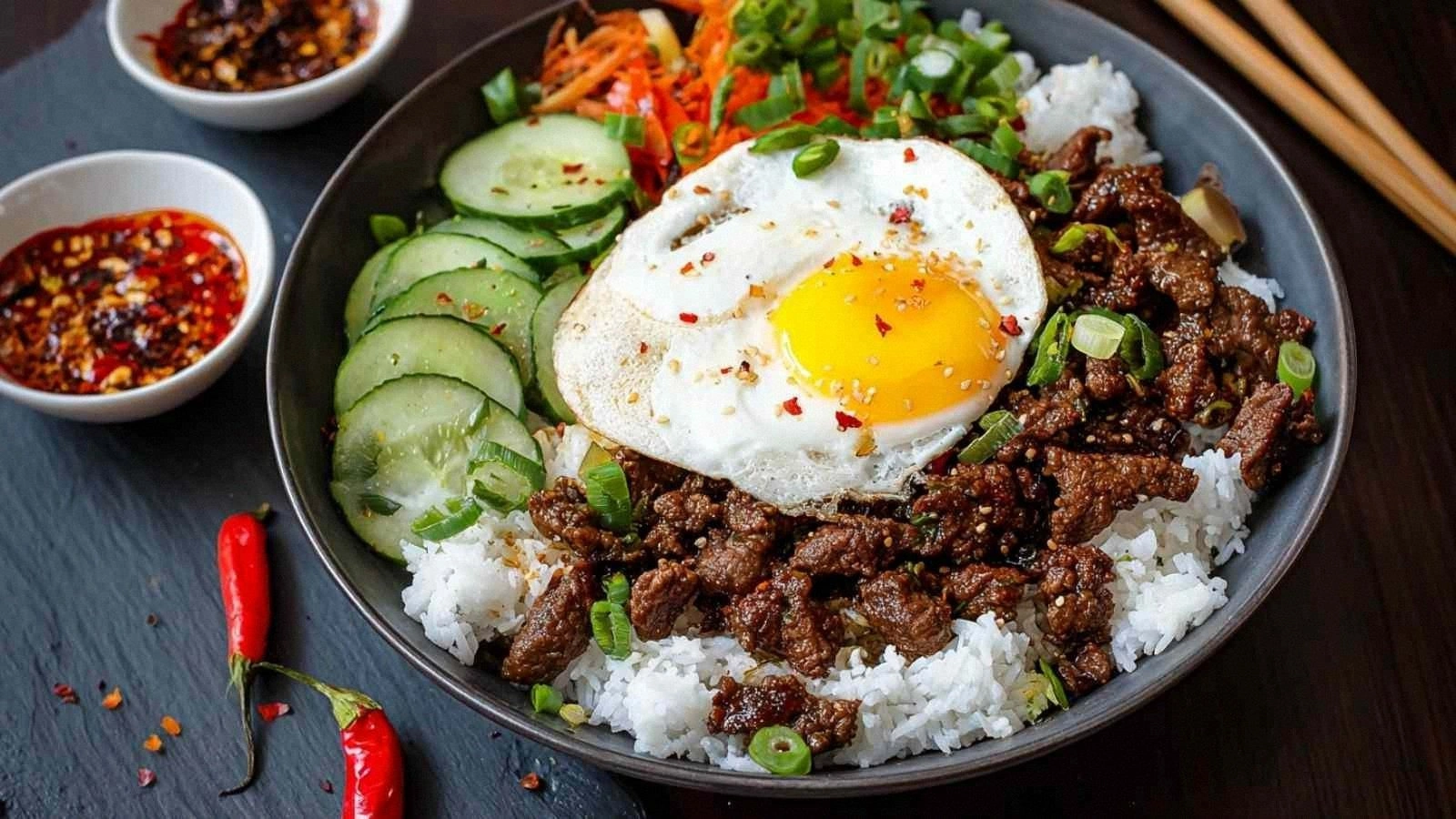
- Spoon the beef and eggs over bowls of cooked white rice. The rice should absorb the sauce, turning glossy and fragrant. The dish now looks as good as it tastes.
- Garnish with chopped scallions and a drizzle of sesame oil if desired. The garnish adds a bright, aromatic finish that completes the dish. Serve immediately, encouraging guests to stir everything together for an even coating.
- Enjoy the first bite, feeling the protein‑packed satisfaction and the balanced flavors. The dish is a testament to how simple ingredients can create a culinary masterpiece. This is the moment of truth, and it’s a delicious one.
That’s it — you did it. But hold on, I’ve got a few more tricks that’ll take this bowl from great to legendary.
Insider Tricks for Flawless Results
The Temperature Rule Nobody Follows
Many cooks over‑cook the beef, resulting in a dry texture. The trick is to let the skillet reach a high temperature before adding the meat, then reduce to medium after the initial sear. This ensures a caramelized crust while keeping the inside juicy. I once tried it on a Sunday and the beef was a revelation.
Why Your Nose Knows Best
The aroma of the sauce is your best indicator of doneness. When the sauce thickens and starts to bubble, it’s time to add the chilies. If you wait too long, the sauce can become overly syrupy and lose its bright acidity. Trust your nose, not your clock.
The 5-Minute Rest That Changes Everything
After cooking, let the skillet rest for five minutes before serving. This allows the flavors to meld and the sauce to settle, preventing a sudden burst of raw heat. I’ve seen people skip this step and end up with a dish that feels rushed.
Use Fresh Chilies, Not Dried
Fresh chilies bring a vibrant, green heat that dried peppers can’t match. The color also adds visual appeal. If you’re in a pinch, substitute with a pinch of red pepper flakes, but the texture will differ.
Don’t Overcrowd the Pan
When you add the beef, give it space to sear properly. Overcrowding leads to steaming, which prevents the caramelized crust. If you’re cooking for a crowd, use a larger skillet or cook in batches.
Finish with Sesame Oil
Sesame oil adds a nutty aroma that elevates the dish. Drizzle it over the finished bowl just before serving. The oil should coat the surface, giving a glossy finish and a subtle flavor boost.
Creative Twists and Variations
This recipe is a playground. Here are some of my favorite ways to switch things up:
Spicy Gochujang Kick
Add a tablespoon of gochujang during step three for a deeper, fermented heat. The sauce becomes richer and slightly smoky, perfect for those who love a complex kick.
Teriyaki Fusion
Replace the soy sauce with teriyaki sauce and add a splash of mirin. The result is a sweeter, more caramelized glaze that pairs wonderfully with the beef.
Vegetarian Version
Swap ground beef for crumbled tofu or tempeh. The tofu absorbs the sauce beautifully, and the dish remains protein‑packed.
Low‑Carb Take
Serve over cauliflower rice instead of white rice. Keep the rest of the recipe unchanged for a low‑carb, high‑protein meal.
Asian Slaw Side
Accompany the bowls with a crunchy Asian slaw made from cabbage, carrots, and a light sesame dressing. The slaw adds a refreshing crunch that balances the richness.
Breakfast Bowl
Use a fried egg on top instead of scrambling them in the pan. This turns the dish into a hearty breakfast bowl that’s both satisfying and protein‑rich.
Storing and Bringing It Back to Life
Fridge Storage
Store the cooked beef and sauce in an airtight container for up to three days. Keep the rice separate to avoid sogginess. When ready to eat, simply reheat the beef mixture in a skillet until hot.
Freezer Friendly
Freeze the beef and sauce in freezer‑safe bags for up to two months. Thaw overnight in the refrigerator and reheat on the stove. The texture remains almost identical to fresh.
Best Reheating Method
Reheat the beef and sauce over medium heat, adding a splash of water if it looks dry. Stir frequently to ensure even heating. The rice can be microwaved with a damp paper towel to keep it fluffy.