Picture this: you’re standing in your kitchen, the stove already humming, and a craving for something savory, sweet, and utterly unforgettable has taken hold. I’ve spent countless evenings wrestling with pork belly, trying to coax that perfect balance of crisp exterior and melt‑in‑your‑mouth tenderness, but nothing quite hit the sweet spot until I discovered the maple‑mustard glaze that turns every bite into a caramelized, smoky kiss.
I remember the first time I tried it—my friend dared me to taste a single bite, then quit eating the rest of the batch. The moment the glaze hit the pork belly, the air filled with a caramelized aroma that made my mouth water before even a single bite touched my tongue. That instant sizzle, the crackle of the edges, the way the sauce clung like velvet to the meat—each element was a sensory symphony that left me craving more.
What sets this version apart is that it’s not just about the glaze; it’s about the harmony of ingredients that each play a distinct role. The pork belly is cut into bite‑sized cubes, giving the dish a convenient finger‑food format, while the maple syrup provides a subtle sweetness that balances the sharpness of Dijon mustard. Smoked paprika adds a smoky undertone that lingers on the palate, and fresh thyme offers a herbal brightness that cuts through the richness.
I’ve spent hours tweaking the ratios, experimenting with different types of mustard, and even testing a handful of alternative sweeteners, but the combination of pure maple syrup and classic Dijon mustard remains the gold standard. It’s the kind of flavor profile that makes you think, “This is hands down the best version you’ll ever make at home.”
And the best part? You can make these in a single pan, no fancy equipment required. All you need is a trusty skillet, a small saucepan, and a willingness to let the flavors mingle. I’ll be honest—after the first batch, I ate half the dish before anyone else even got a taste. If you’ve ever struggled to get pork belly to stay juicy while getting a crisp crust, you’re not alone. I’ve got the fix.
So, if you’re ready to turn an ordinary kitchen moment into an extraordinary culinary experience, let me walk you through every single step. By the end, you’ll wonder how you ever made pork belly any other way. And trust me, the first bite will have you saying, “I dare you to taste this and not go back for seconds.”
What Makes This Version Stand Out
- Flavor: The maple glaze brings a natural sweetness that caramelizes beautifully, while Dijon mustard injects a tang that cuts through the pork’s richness.
- Texture: The pork belly is diced into bite‑sized cubes, ensuring each piece has a crisp exterior and a juicy interior.
- Ease: No complex prep—just a single skillet, a few minutes of simmering, and a handful of pantry staples.
- Versatility: These bites can double as party starters, a hearty snack, or an elegant addition to a holiday spread.
- Crowd‑pleaser: The sweet‑savory profile is universally loved, making it perfect for gatherings where you want to impress without fuss.
- Make‑ahead: The glaze can be pre‑made, and the pork can be cooked ahead and reheated without losing flavor.
Inside the Ingredient List
The Flavor Base
Maple syrup is the star of the show, providing a natural sweetness that caramelizes when heated. The key to a perfect glaze is using a pure maple syrup with a 60‑70% sugar content; this ensures a rich, buttery flavor without bitterness. If you prefer a lighter sweet note, a 50% syrup will still work but the glaze will be less thick. Skipping maple syrup will leave the dish flat—no, not flat, but it will lack that signature caramelized sheen.
Dijon mustard brings sharpness and depth. It’s a classic pairing with maple, but if you’re allergic or simply don’t have it on hand, a grainy mustard or a touch of horseradish can provide a similar bite. The mustard’s acidity balances the fat of the pork, creating a harmonious mouthfeel. When you add mustard, watch the glaze’s consistency; too much can thin it out, so start with the recommended amount and adjust.
The Texture Crew
Pork belly is a fatty cut that needs careful handling to achieve a crispy exterior while keeping the inside juicy. Cutting it into uniform 1‑inch cubes ensures even cooking and a consistent bite. If you use a thicker cut, the edges will take longer to crisp and may become dry. A good trick is to score the skin lightly with a knife before cooking; this helps the fat render and the glaze adhere better.
Olive oil is used to sear the pork, providing a high‑smoke‑point medium that helps develop a golden crust. You can substitute avocado oil for a slightly higher smoke point if you’re aiming for extra crispness. The oil also serves as a carrier for the glaze, helping it cling to each cube.
The Unexpected Star
Smoked paprika is the secret weapon that adds depth and a subtle smoky flavor without the need for a smoker. It’s a quick way to elevate the dish, especially when the pork is still in the pan. If you’re in a pinch, you can use regular paprika and a pinch of liquid smoke to mimic the effect. The paprika also adds a pop of color, making the bites visually appealing.
Fresh thyme brings a bright herbal note that cuts through the richness of the pork belly. The thyme’s essential oils release as the glaze simmers, infusing the meat with a fragrant aroma. If fresh thyme is unavailable, dried thyme can be used, but use only half the amount as dried herbs are more potent.
The Final Flourish
Garlic cloves add a savory punch that complements the sweet glaze. Mince them finely so they distribute evenly across the pork pieces. If you’re not a garlic fan, you can reduce the amount or omit it entirely, though the dish will lose a layer of complexity.
Salt and pepper to taste are essential for seasoning the pork before searing. They enhance the natural flavors and help the glaze adhere. Remember, the glaze contains sodium from soy sauce and mustard, so a light hand with additional salt is wise.
Everything's prepped? Good. Let's get into the real action...
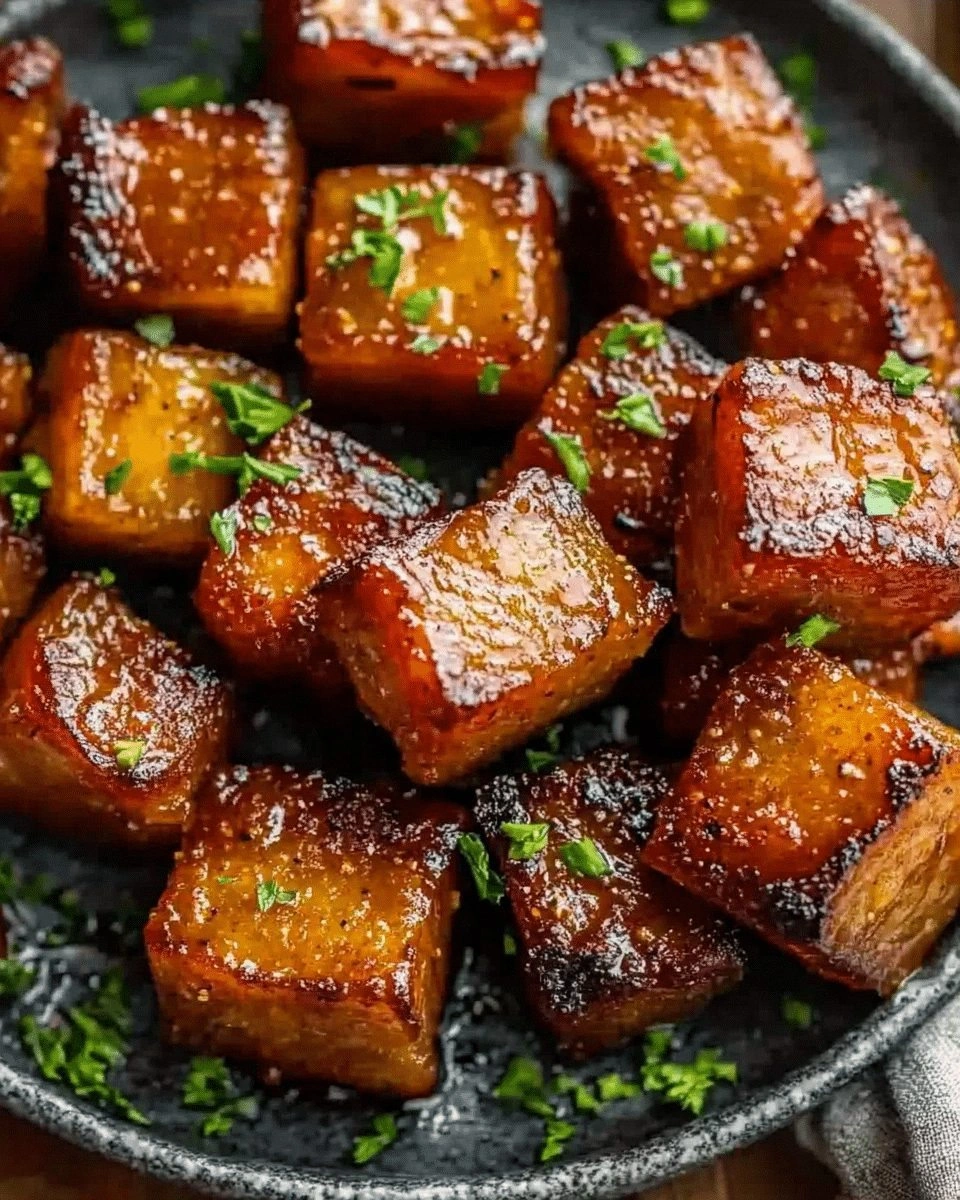
The Method — Step by Step
- Prep the pork: Pat the pork belly cubes dry with paper towels—dryness is key for a crisp finish. Season each cube lightly with salt and pepper. Set aside while you prepare the glaze.
- Make the glaze: In a small saucepan, combine maple syrup, Dijon mustard, soy sauce, and minced garlic. Heat over medium-low, stirring until the mixture starts to thicken slightly. This should take about 3–4 minutes; the glaze will bubble gently, not boil.
- Seal the flavors: Add smoked paprika and fresh thyme to the saucepan. Stir until the spices are evenly distributed and the glaze smells aromatic. This is the moment of truth—your kitchen will fill with a sweet‑savory perfume that makes you forget you’re cooking.
- Heat the pan: Add olive oil to a large skillet and heat over medium‑high until shimmering. The oil should not smoke—if it starts to, lower the heat slightly.
- Sear the pork: Place the pork cubes in a single layer, making sure not to overcrowd the pan. Sear for 2–3 minutes per side until a golden brown crust forms. This step is crucial; the caramelized edges will hold the glaze together.
- Glaze the pork: Once all sides are browned, pour the glaze over the pork in the skillet. Toss gently so each cube is coated. Reduce the heat to medium and let the mixture simmer for 5 minutes, allowing the glaze to thicken and coat the meat.
- Finish with a flourish: After the glaze has thickened, remove the skillet from heat. Let the pork sit for a minute so the glaze can set slightly. The result is a glossy, caramelized coating that clings to every bite.
- Serve hot: Transfer the pork belly bites to a serving platter. Garnish with a sprinkle of fresh thyme or a dusting of smoked paprika for an extra pop of color. Serve immediately while the glaze is still glossy.
That's it — you did it. But hold on, I've got a few more tricks that'll take this to another level...
Insider Tricks for Flawless Results
The Temperature Rule Nobody Follows
Many cooks assume that high heat is the key to a crispy pork belly. In reality, starting at medium‑high and then lowering the heat after searing preserves the pork’s juices. If you keep the heat too high, the exterior will burn before the interior cooks, resulting in a dry bite.
Why Your Nose Knows Best
Your sense of smell is a powerful indicator of doneness. When the glaze begins to bubble and emit a sweet, caramelized aroma, it’s time to add the pork. A faint scent of maple and mustard means the glaze is ready; if it smells too raw, give it a minute longer.
The 5-Minute Rest That Changes Everything
After you remove the skillet from heat, let the pork rest for 5 minutes. This rest period allows the juices to redistribute and the glaze to set, creating a glossy, cohesive coating. Skipping this step can leave the glaze thin and the pork slightly greasy.
The Quick Chill Trick
If you’re making these ahead of time, let the pork cool to room temperature, then refrigerate. When you’re ready to serve, reheat in a skillet over medium heat for 2 minutes, then finish with a quick glaze to revive the shine. This method keeps the texture intact and saves you from overcooking.
The Secret to Even Pieces
Use a sharp knife to cut the pork belly into uniform cubes. Evenness ensures each piece cooks at the same rate, preventing some from being overdone while others remain undercooked. If you’re short on time, buy pre‑cubed pork belly to guarantee consistency.
Creative Twists and Variations
This recipe is a playground. Here are some of my favorite ways to switch things up:
Spicy Maple‑Mustard Bites
Add a teaspoon of crushed red pepper flakes to the glaze for a fiery kick. The heat balances the sweetness and gives the dish an edge that pairs well with a cold beer.
Asian Fusion
Swap soy sauce for tamari and add a splash of sesame oil. Finish with toasted sesame seeds and sliced green onions for an umami‑rich, Asian‑inspired flavor profile.
Herb‑Infused Glaze
Replace thyme with rosemary or sage for a more earthy undertone. The robust herbs complement the pork’s richness and add a fragrant aroma.
Smoky Chipotle Version
Introduce chipotle powder or a small amount of adobo sauce to the glaze. The smoky, slightly sweet flavor turns the bites into a crowd‑pleasing, bold‑flavor option.
Citrus Brightened
Add a tablespoon of orange or lemon zest to the glaze for a bright, citrusy lift. The acidity cuts through the pork’s fattiness and gives the dish a fresh, vibrant finish.
Storing and Bringing It Back to Life
Fridge Storage
Store leftovers in an airtight container in the refrigerator for up to 3 days. Keep the glaze separate if you prefer a fresher coating, then re‑coat before serving.
Freezer Friendly
Freeze the cooked bites in a single layer on a baking sheet, then transfer to a freezer bag once solid. They’ll keep for up to 3 months. When ready, thaw overnight in the refrigerator.
Best Reheating Method
Reheat in a skillet over medium heat, adding a splash of water or broth to create steam. The steam will help the pork regain its juiciness and the glaze will become glossy again. Avoid microwaving, which can make the pork rubbery.