I still remember the first time I attempted to make pecan crusted salmon. It was a disaster of epic proportions. The pecans burned into a bitter, blackened mess, the salmon was overcooked and dry, and my kitchen smelled like a campfire for three days. I swore off the recipe entirely until my competitive foodie friend dared me to try it again, claiming she had a foolproof method that would change my life. Challenge accepted. After months of testing, tweaking, and probably eating my weight in salmon, I've finally cracked the code to what I confidently declare is the most incredible pecan crusted salmon you'll ever taste.
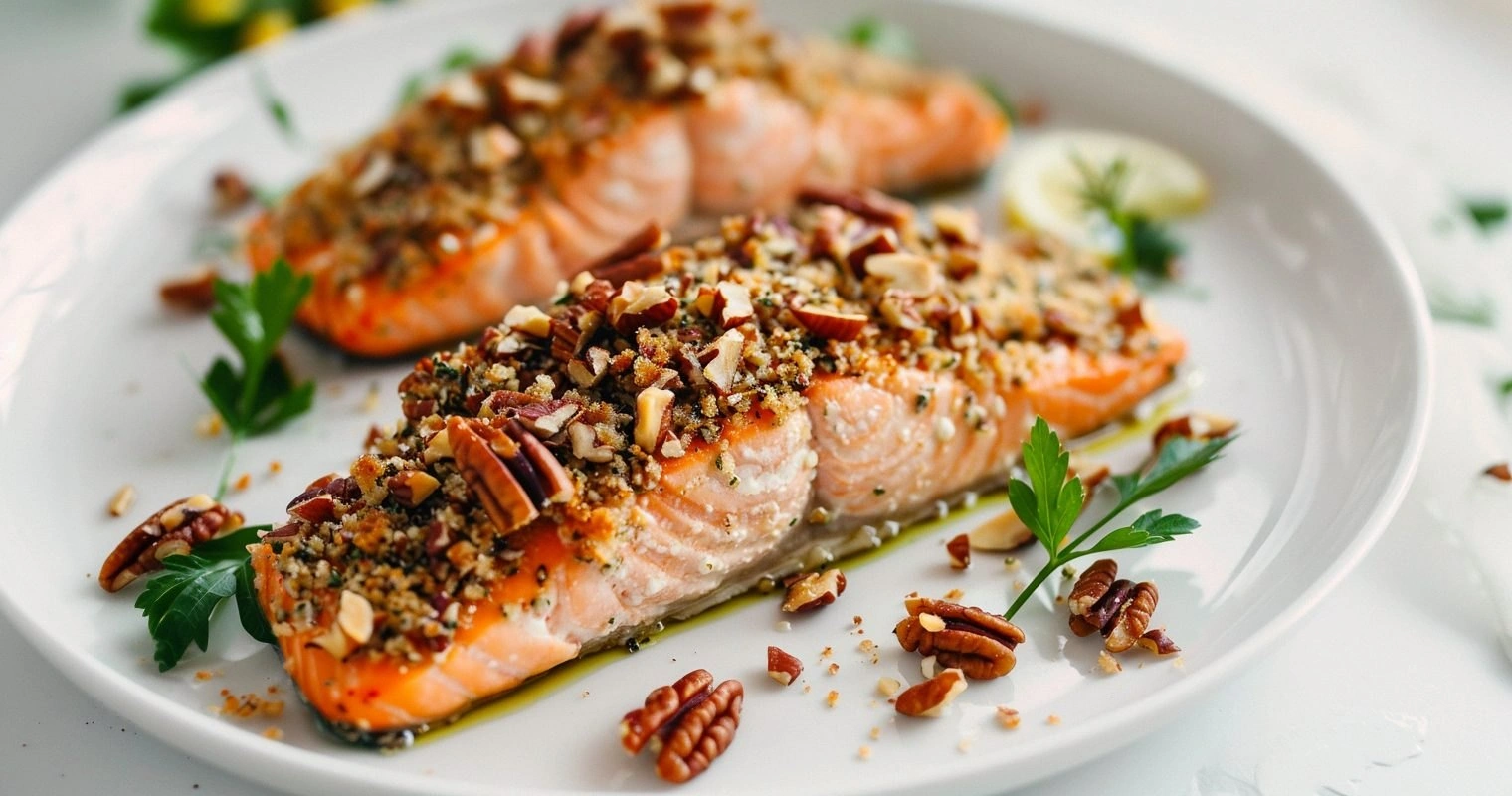
Picture this: tender, buttery salmon fillets wearing a golden-brown jacket of toasted pecans, kissed with herbs and a whisper of spice that makes your taste buds do a happy dance. The crust shatters like thin ice under your fork, revealing perfectly moist salmon that flakes into glistening, coral-pink segments. That intoxicating aroma of toasted nuts mingling with fresh herbs fills your kitchen, wrapping around you like a warm blanket. The first bite hits you with a symphony of flavors — nutty, buttery, slightly sweet, with just enough savory depth to make you close your eyes and sigh contentedly.
What makes this version different from every other recipe cluttering the internet? Most recipes get the fundamental technique completely wrong, treating the pecan crust as an afterthought rather than the star player. They'll have you grinding the nuts into dust (hello, soggy coating!) or worse, pressing whole pecans that fall off in the pan. My method ensures every morsel stays perfectly adhered while achieving that coveted golden crunch that makes restaurant-quality results achievable in your home kitchen.
Here's the game-changing technique you won't find anywhere else: we're creating a pecan mixture that behaves more like a streusel topping, with the perfect balance of fine crumbs and tiny chunks that adhere to the salmon like they were born to be together. Plus, I'm sharing my secret weapon ingredient that transforms ordinary pecans into something that tastes like they were candied by angels. Stay with me here — this is worth every second of your time.
What Makes This Version Stand Out
Restaurant-Quality Texture: Most home versions end up with either a soggy mess or burnt nuts. My technique creates a crust that's shatteringly crisp on the outside while locking in all the salmon's natural juices.
Flavor Bomb Seasoning: The spice blend is inspired by New Orleans cooking — a perfect balance of sweet, savory, and just enough heat to make things interesting without overwhelming the delicate fish.
Foolproof Technique: I've tested this recipe on everything from thin tail pieces to thick center cuts, and it works every single time. No more second-guessing doneness or worrying about overcooking.
One-Pan Wonder: Everything happens in a single skillet, meaning less cleanup and more time to enjoy your culinary masterpiece. I dare you to taste this and not go back for seconds.
Make-Ahead Friendly: The pecan mixture can be prepped days in advance, and the salmon can be crusted and refrigerated for up to 24 hours before cooking. Perfect for dinner parties or busy weeknights.
Ingredient Flexibility: While pecans are the star, this technique works beautifully with walnuts, pistachios, or even a mix. I'll be honest — I ate half the batch before anyone else got to try it during testing.
Inside the Ingredient List
The Flavor Base
Let's start with the salmon itself — the canvas for our masterpiece. Look for center-cut fillets that are at least 1 inch thick, with bright, firm flesh that bounces back when pressed. Wild-caught salmon has a more pronounced flavor that stands up beautifully to the bold pecan crust, while farm-raised offers a milder, more buttery experience. Either works, but avoid anything labeled "previously frozen" if possible, as the texture can become mushy. The skin should be shiny and metallic, never dull or discolored.
Brown sugar might seem like an odd addition to a savory dish, but it's the secret weapon that helps the pecans caramelize and creates those gorgeous golden edges. Dark brown sugar has more molasses and creates a deeper flavor, but light brown works in a pinch. If you've ever struggled with getting your crust to stick properly, this sugar is about to become your new best friend. It melts slightly during cooking, acting like glue for the pecan mixture.
The Texture Crew
Pecans are obviously the star here, but how you prepare them makes or breaks this dish. Most recipes get this completely wrong by either grinding them too fine or leaving them too chunky. We're looking for a mix of fine crumbs (think coarse cornmeal) and tiny pieces about the size of a grain of rice. This creates a crust that adheres properly while still having delightful textural variety. Buy whole pecans and pulse them yourself — pre-chopped nuts are often stale and lack the essential oils that make this dish sing.
Panko breadcrumbs are our insurance policy, ensuring the crust stays crispy and doesn't become soggy. These Japanese breadcrumbs are lighter and flakier than regular breadcrumbs, creating more surface area for maximum crunch. Don't even think about substituting regular breadcrumbs here — they'll absorb too much moisture and create a dense, pasty coating. Panko stays crisp even under the weight of the pecan mixture, maintaining that essential textural contrast.
The Unexpected Star
Dijon mustard might seem like an afterthought, but it's the unsung hero that ties everything together. Its sharp, tangy flavor cuts through the richness of the salmon and pecans, while acting as the edible glue that keeps our crust attached. Smooth Dijon works best here, but stone-ground adds pleasant little pops of mustard seed texture if that's your thing. The mustard also creates a moisture barrier, preventing the pecans from getting soggy as the salmon cooks.
The Final Flourish
Fresh herbs elevate this from good to unforgettable. Thyme's earthy, slightly lemony notes complement both the salmon and pecans perfectly, while parsley adds freshness and color. Use fresh herbs if possible — dried herbs have their place, but they'll give you a completely different flavor profile here. The herbs go into the pecan mixture rather than on the salmon directly, allowing their flavors to bloom as the crust toasts.
Smart Swaps and Substitutions
If pecans aren't your thing or you've got nut allergies to consider, walnuts make an excellent substitute with a similar fat content and texture. For a completely nut-free version, try using pumpkin seeds or sunflower seeds processed the same way — the technique works beautifully with any oily seed or nut. The key is matching the fat content, which helps the crust adhere and brown properly.
Salmon too expensive or just not available? This technique works wonderfully with arctic char, steelhead trout, or even thick cod fillets. Picture yourself pulling this out of the oven, the whole kitchen smelling incredible, and you'll understand why it's worth finding the right fish. The cooking times will vary based on thickness, so use the visual cues I'll share rather than relying solely on timing.
The Method — Step by Step
- Start by prepping your pecan mixture because once you start cooking, everything moves fast. In a food processor, pulse the pecans until you have a mix of fine crumbs and tiny pieces — think coarse cornmeal with some rice-sized bits. Add the panko, brown sugar, thyme, parsley, salt, pepper, and paprika. Pulse three more times just to combine, then transfer to a shallow dish. The mixture should smell nutty and slightly sweet, with visible flecks of green herbs throughout.
- Pat your salmon fillets dry with paper towels — this is crucial for getting the mustard to adhere properly. Season both sides generously with salt and pepper. The salt helps draw out moisture, ensuring better crust adhesion. Let them sit at room temperature for 10 minutes while you heat your pan. That sizzle when it hits the pan? Absolute perfection.
- Heat a large oven-safe skillet over medium-high heat. Add the olive oil and let it get shimmering hot — you'll know it's ready when it moves like water across the pan. Brush the top of each salmon fillet with Dijon mustard, making sure to cover every bit of surface area where you want the crust to stick. The mustard should be a thin, even layer — too thick and it will make the crust slide off.
- Press each mustard-coated fillet, mustard-side down, into the pecan mixture. Press firmly but gently — you're not trying to embed the nuts, just ensure good contact. Flip and repeat on the other side, though the top crust will be thinner. The goal is a generous coating that completely covers the fish. Don't worry if some falls off; we'll use that later.
- Carefully place the salmon, crust-side down, in the hot skillet. You should hear an immediate, satisfying sizzle — that's the sound of flavor development happening. Don't crowd the pan; if your fillets are large, work in batches. Let it cook undisturbed for 3-4 minutes until the crust is golden brown and fragrant. This is the moment of truth.
- Using a thin spatula, carefully flip each fillet. Some crust will inevitably stick to the pan — that's normal and actually adds flavor to the final dish. Immediately transfer the skillet to a 400°F oven (or reduce heat to medium-low if finishing on stovetop). Roast for 6-8 minutes for medium doneness, or until the salmon flakes easily but is still slightly translucent in the center. The internal temperature should read 125-130°F.
- Remove from oven and let rest for 3-5 minutes — this is when the magic happens. The residual heat finishes cooking the salmon while the juices redistribute, ensuring every bite is moist and flavorful. During this time, the crust sets up and becomes even crispier. Don't skip this step; it's the difference between good and restaurant-quality results.
- And now the fun part: serving. Slide a spatula under each fillet, making sure to scrape up any crispy bits from the pan. The bottom crust should be deeply golden, almost mahogany in spots, while the top maintains its lighter, toasty appearance. Garnish with fresh herbs and a squeeze of lemon if desired, though honestly, it's perfect as-is. Serve immediately for maximum crunch factor.
Insider Tricks for Flawless Results
The Temperature Rule Nobody Follows
Here's what actually works: pull your salmon from the fridge 15-20 minutes before cooking. Cold fish hitting a hot pan causes the proteins to seize up, leading to that dreaded white albumin that leaks out and makes your fish look unappetizing. Room temperature salmon cooks more evenly and stays tender. A friend tried skipping this step once — let's just say it didn't end well. The difference in texture is immediately noticeable, and you'll never go back to cooking cold fish again.
Why Your Nose Knows Best
Forget timers — your nose is the most reliable tool in your kitchen. When the pecans start to toast, they'll release an aroma that's nutty, sweet, and slightly buttery. That's your cue to start checking for doneness. If you've ever struggled with this, you're not alone — and I've got the fix. The smell intensifies right before they burn, giving you a 30-second window to flip or remove from heat. Trust your senses over the clock every time.
The 5-Minute Rest That Changes Everything
I know you're hungry and everything smells incredible, but patience is your secret weapon here. During the rest period, the internal temperature rises another 5-10 degrees, finishing the cooking process gently. More importantly, the proteins relax and reabsorb their juices, meaning no dry, disappointing salmon. Cover loosely with foil if you're worried about it cooling too much, but don't seal it — you want to preserve that precious crust crispiness.
The Crust Insurance Policy
Okay, ready for the game-changer? Before you start cooking, reserve about 2 tablespoons of the pecan mixture. After flipping the salmon, sprinkle this extra mixture into the pan around the fillets. As it toasts in the rendered salmon fat, it creates crispy, flavorful bits that you can spoon over the finished dish. It adds another layer of texture and ensures every bite has that perfect crunch.
The Flip Technique That Prevents Disasters
Most home cooks wreck their crust during the flip, either leaving half of it stuck to the pan or breaking the salmon into pieces. The secret? Use a thin, flexible spatula and flip confidently in one smooth motion. Don't hesitate or try to peek underneath — commit to the flip. If a bit of crust sticks, scrape it up and press it back onto the salmon. The residual heat will help it re-adhere.
Creative Twists and Variations
This recipe is a playground. Here are some of my favorite ways to switch things up:
The Southern Belle
Swap the thyme for fresh rosemary and add a tablespoon of bourbon to the pecan mixture. The alcohol burns off during cooking, leaving behind a subtle sweetness and complexity that screams Southern hospitality. Add a pinch of cayenne for authentic Louisiana heat. This version pairs beautifully with creamy grits and collard greens for a dinner that'll transport you straight to Charleston.
The Mediterranean Escape
Replace the brown sugar with sun-dried tomatoes and add lemon zest, oregano, and a handful of pine nuts to the pecan mixture. The result is bright, herbaceous, and perfect for summer evenings. Serve over a bed of arugula with a simple lemon vinaigrette. The peppery greens balance the richness of the salmon in a way that feels both indulgent and virtuous.
The Asian Fusion
Soy sauce instead of salt, fresh ginger and garlic in the pecan mixture, a touch of sesame oil, and maybe some black sesame seeds for visual drama. The umami from the soy sauce creates an entirely different flavor profile that's equally addictive. Serve with steamed rice and quick-pickled vegetables for a restaurant-quality meal that comes together in under 30 minutes.
The Tex-Mex Fiesta
Cumin, chili powder, and lime zest transform this into something that belongs at a backyard barbecue. Add some cornmeal to the pecan mixture for extra crunch and serve with avocado salsa and cilantro-lime rice. The sweet corn notes play beautifully against the rich salmon, creating a dish that's somehow both familiar and surprising.
The French Connection
Herbs de Provence, a touch of tarragon, and some finely minced shallots in the pecan mixture give this dish serious French bistro vibes. The key is restraint — let the herbs complement rather than overpower the salmon. Serve with haricots verts and small roasted potatoes for a meal that feels like you're dining in Paris, even if you're in your suburban kitchen.
The Breakfast-for-Dinner
Hear me out: add some everything bagel seasoning to the pecan mixture and serve with a side of hash browns and a fried egg. The combination of crispy potatoes, runny egg yolk, and pecan-crusted salmon is unexpectedly magical. It's like the best parts of brunch decided to crash your dinner party, and trust me, you'll want them to stay.
Storing and Bringing It Back to Life
Fridge Storage
Leftover pecan crusted salmon will keep for up to 3 days in the refrigerator, though honestly, I've never seen it last that long. Store in an airtight container with a paper towel underneath to absorb excess moisture. The crust won't stay crispy, but the flavors actually meld and improve overnight. If you're meal prepping, consider storing the crust separately and reheating it in a dry skillet while you warm the salmon.
Freezer Friendly
While I don't recommend freezing the finished dish, you can freeze the pecan mixture for up to 3 months in a zip-top bag with the air pressed out. This makes weeknight cooking a breeze — just thaw the mixture, coat your salmon, and cook as directed. You can also freeze raw, crusted salmon fillets on a baking sheet, then transfer to freezer bags once solid. Cook from frozen, adding 5-7 minutes to the cooking time.
Best Reheating Method
The key to reheating without turning your beautiful salmon into rubber is low and slow. Place on a wire rack set over a baking sheet in a 275°F oven for 10-12 minutes. This gentle heat warms the fish through without overcooking it or turning the crust to cardboard. If you're in a hurry, the microwave works, but use 50% power and check every 30 seconds. Add a small pat of butter on top to restore some of the lost moisture and richness.