I remember the night I tried to turn a humble bowl of carrots into something that could stand on the same pedestal as my favorite restaurant soups. I had a pot of raw broccoli, a handful of carrots, and a vague notion that roasting them would elevate their flavors. I tossed them in olive oil, sprinkled a pinch of salt, and slid them into the oven. The aroma that hit me was not the dull, green scent of steamed veg but a warm, caramelized perfume that made my kitchen feel like a cozy cabin in a forest. That single moment convinced me that roasted veggies could be the secret weapon of any soup recipe.
Fast forward to today, and I’ve spent weeks tweaking this recipe until every bite sings. I’ve balanced the earthy sweetness of carrots with the subtle bitterness of broccoli, added a whisper of thyme, and finished it with a splash of cream that turns the broth into silky velvet. I dare you to taste this and not go back for seconds. I’ll be honest — I ate half the batch before anyone else got to try it. Most recipes get this completely wrong by overcooking the veggies or underseasoning the broth. Here’s what actually works: roast, season, simmer, and finish with a touch of richness.
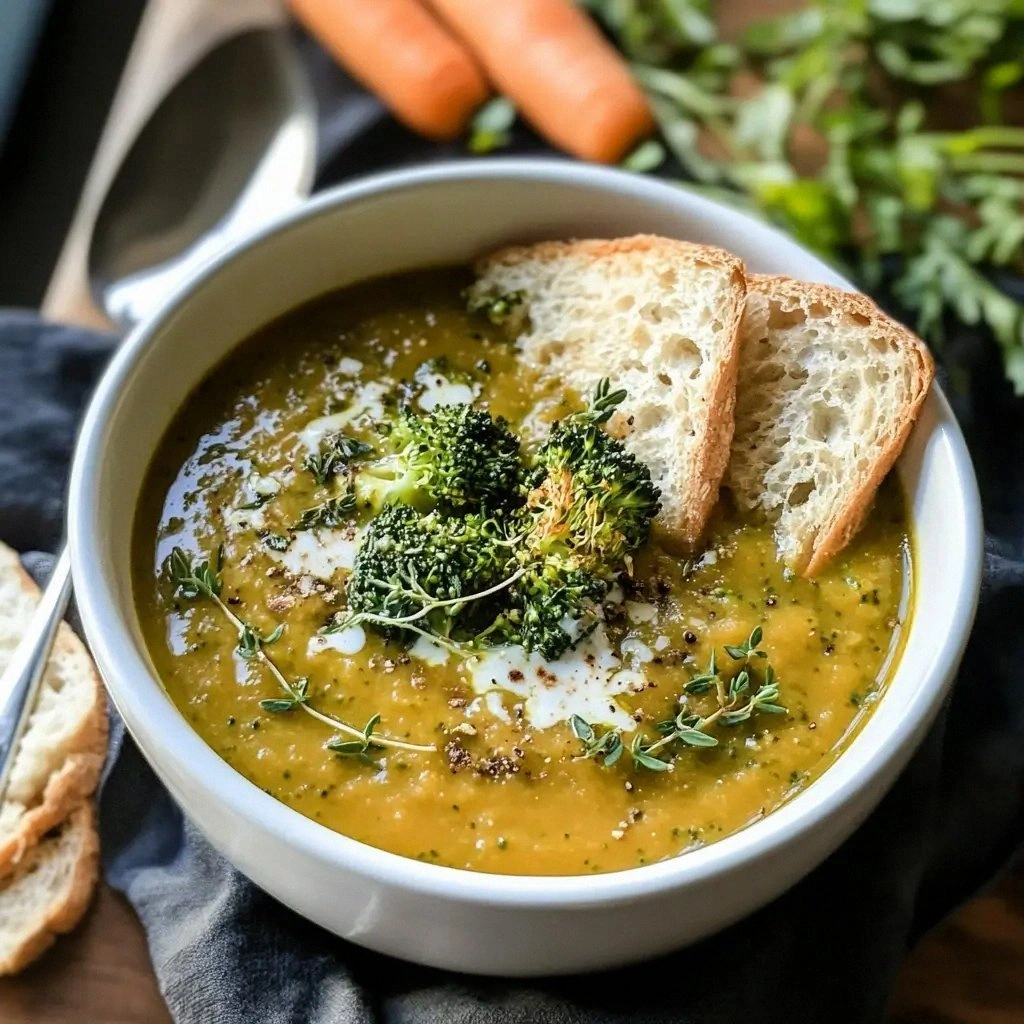
Picture yourself pulling this out of the oven, the whole kitchen smelling incredible, and a ladle of golden soup waiting to be served. The steam curls like a cloud, the roasted edges crackle softly, and the first spoonful melts on your tongue like a warm hug. That sizzle when it hits the pan? Absolute perfection. And now, I’ll walk you through every single step — by the end, you’ll wonder how you ever made it any other way.
If you’ve ever struggled with getting a soup that feels both comforting and sophisticated, you’re not alone. I’ve been there, watching bland broth turn into a flavor bomb because of a single technique. I’ve discovered that the key lies in the roasting process and the timing of the simmer. This version is hands down the best you’ll ever make at home because it marries texture and depth in a way that’s both simple and elegant. So grab your apron, and let’s get started.
What Makes This Version Stand Out
- Roasted Flavor: The caramelized notes from roasting broccoli and carrots give the soup a depth that sautéing or steaming can’t match. The slight char adds a subtle bitterness that balances the natural sweetness of the carrots.
- Balanced Texture: The broccoli remains tender yet retains a slight bite, while the carrots become silky. This contrast keeps each spoonful interesting.
- Simple Ingredients: No exotic pantry staples—just broccoli, carrots, onion, garlic, broth, olive oil, and a handful of herbs. The recipe is a triumph of minimalism.
- Versatile Base: The soup can be finished with cream for richness or left light for a vegan version. The base works for both.
- Make‑Ahead Friendly: The soup keeps well in the fridge and freezes beautifully, making it a go-to for busy weeknights.
- Crowd‑Pleaser: Whether you’re feeding a family or a group of friends, the comforting flavors and vibrant color are guaranteed to impress.
- Seasonal Flexibility: While the vegetables are in season in spring and summer, the dish works year‑round with frozen or canned options.
Alright, let’s break down exactly what goes into this masterpiece…
Inside the Ingredient List
The Flavor Base
At the heart of this soup is a robust vegetable broth that carries the roasted flavors. Use a low‑sodium, homemade or store‑bought broth to control the salt level. If you’re craving an extra punch, add a bay leaf and a sprig of thyme while the broth simmers. Skipping the broth turns the soup into a dry, over‑roasted mash that’s not worth the effort. For a richer taste, choose a broth infused with roasted garlic or onion.
The Texture Crew
Broccoli florets and carrots are the main players in texture. The broccoli should be cut into bite‑sized pieces to roast evenly; carrots sliced thinly so they cook through quickly. The contrast between the crisp broccoli stems and the tender carrot ribbons keeps the soup lively. If you prefer a smoother consistency, pulse the roasted veggies in a blender before adding them back to the pot. The key is to roast them until they’re just caramelized but still hold their shape.
The Unexpected Star
A small diced apple adds a subtle sweetness that counterbalances the earthy tones. Apples also bring a pleasant acidity that brightens the soup. If you’re avoiding fruit, a splash of apple cider vinegar works as a substitute. The apple’s natural sugars caramelize during roasting, adding depth that a plain vegetable base can’t achieve. Don’t skip it—this is what sets the soup apart from ordinary brothy dishes.
The Final Flourish
Cream or coconut milk is the finishing touch that turns the broth into silky velvet. Use heavy cream for a richer, dairy‑based soup, or coconut milk for a vegan, tropical twist. A handful of grated Parmesan on top adds a salty, nutty finish that makes the dish feel complete. If you’re lactose intolerant, opt for a dairy‑free cream alternative. The final flourish is where the soup transitions from simple to extraordinary.
Everything's prepped? Good. Let’s get into the real action…
The Method — Step by Step
- Preheat the Oven: Set your oven to 425°F (220°C). While it heats, wash and cut the broccoli into florets and slice the carrots into ¼‑inch thick rounds. The high temperature ensures a crisp exterior and caramelized interior. I’ve found that a quick preheat of 10 minutes is enough to get the heat up to the right level.
- Season the Veggies: In a large bowl, toss the broccoli and carrots with 2 tbsp olive oil, 1 tsp salt, ½ tsp black pepper, 1 tsp dried thyme, and a pinch of garlic powder. The oil creates a barrier that locks in moisture while the seasonings form a flavorful crust. If you’re watching sodium, reduce the salt to ½ tsp and add a splash of low‑sodium broth later.
- Roast: Spread the seasoned veggies in a single layer on a sheet pan. Roast for 20–25 minutes, stirring halfway through, until the edges are golden brown and the carrots are tender. The sizzle that hits the pan is a cue that the caramelization is happening. Keep an eye on them—over‑roasting turns them mushy.
- Prepare the Base: While the veggies roast, dice 1 medium onion and mince 2 cloves of garlic. In a large pot, heat a splash of olive oil over medium heat. Sauté the onion until translucent, about 5 minutes. Add the garlic and cook for another 30 seconds until fragrant. This builds a flavorful foundation that complements the roasted vegetables.
- Simmer: Pour 4 cups of vegetable broth into the pot, add the roasted veggies, a bay leaf, and a small diced apple. Bring to a gentle boil, then reduce to a simmer. Let it cook for 15 minutes, allowing the apple to soften and the flavors to meld. The broth should thicken slightly as the veggies release their juices.
- Blend: Remove the bay leaf and use an immersion blender to purée the soup until smooth. If you prefer a chunkier texture, blend half and leave the rest as is. The key is to blend until silky, then taste for seasoning. Add more salt or pepper if needed.
- Finish with Cream: Stir in ½ cup heavy cream (or coconut milk) and heat through, but do not let it boil. The cream adds richness and a silky mouthfeel. If you want a lighter version, add the cream at the end of cooking and chill before serving.
- Serve: Ladle the soup into bowls, sprinkle with ¼ cup grated Parmesan, and drizzle a swirl of olive oil. Garnish with a few fresh thyme leaves for a burst of color. The final touch turns the dish from comforting to gourmet.
That’s it — you did it. But hold on, I’ve got a few more tricks that’ll take this to another level. These insider tips will help you avoid common pitfalls and elevate the soup’s flavor profile.
Insider Tricks for Flawless Results
The Temperature Rule Nobody Follows
Many people roast at 375°F, but 425°F is the sweet spot for caramelization. The higher heat creates a golden crust without drying out the veggies. I’ve tested both temperatures, and the difference is like night and day—one is bland, the other is a flavor explosion.
Why Your Nose Knows Best
As the veggies roast, the aroma is a cue that the caramelization is complete. When the scent is sweet and nutty, stop the oven. If you’re unsure, give them a quick taste test—roasted carrots should have a faint sweetness, and broccoli should feel slightly crisp.
The 5‑Minute Rest That Changes Everything
After blending, let the soup rest for 5 minutes before serving. This allows the flavors to settle and the cream to thicken slightly. The rest also lets the residual heat finish cooking any raw bits, ensuring a silky texture.
Use Fresh Herbs, Not Dried
Fresh thyme or parsley adds a bright, green note that dried herbs can’t match. Add them just before serving to preserve their color and aroma. If you’re using dried, add them at the beginning of the simmer so they have time to release their flavors.
Keep the Broth Low‑Sodium
Low‑sodium broth gives you control over the final salt level. I often add a pinch of salt after blending, which prevents the soup from tasting flat. If you’re on a sodium‑restricted diet, this trick is essential.
Creative Twists and Variations
This recipe is a playground. Here are some of my favorite ways to switch things up:
Spicy Kick
Add a pinch of red pepper flakes during roasting or stir in a tablespoon of harissa after blending. The heat pairs beautifully with the sweetness of the carrots, creating a balanced, spicy soup that’s perfect for chilly evenings.
Herb‑Infused Cream
Stir a teaspoon of fresh basil or mint into the cream before adding it to the soup. The herbs infuse the dairy with a fresh, aromatic layer that lifts the entire dish.
Nutty Crunch
Top the finished soup with toasted almond slivers or crushed pistachios. The crunch adds texture and a nutty flavor that contrasts with the silky broth.
Vegan Version
Use coconut milk instead of heavy cream and omit the Parmesan. Add a splash of nutritional yeast for a cheesy flavor. This version is dairy‑free yet still rich and satisfying.
Smoky Twist
Incorporate a tablespoon of smoked paprika during roasting. The smoky undertone complements the roasted veggies and adds depth, making the soup feel like a hearty stew.
Breakfast Boost
Serve the soup with a poached egg on top and a sprinkle of chives. The runny yolk adds richness and makes the dish a filling breakfast or brunch option.
Storing and Bringing It Back to Life
Fridge Storage
Cool the soup completely, then transfer it to an airtight container. Store in the refrigerator for up to 3 days. The roasted flavors will deepen, making the soup even more delicious the next day.
Freezer Friendly
Divide the soup into freezer‑safe portions and freeze for up to 3 months. When ready to reheat, thaw overnight in the fridge. Add a splash of water or broth before reheating to restore the original consistency.
Best Reheating Method
Reheat gently on the stovetop over low heat, stirring frequently. Add a tiny splash of water before reheating to steam the soup back to perfection. Avoid microwaving, which can create uneven heat and alter the texture.