Picture this: I’m in my cramped kitchen, a half‑cooked pasta sauce bubbling on the stove, and the only thing that could rescue the night is a burst of color and earthiness. I grabbed a bag of raw beets, thinking a quick side salad would do the trick, but the moment those ruby roots hit the hot oven, the whole room filled with a perfume that could convince anyone that autumn had arrived early. The scent was sweet, almost floral, like a garden after rain, and I could hear the faint crackle of the skin as it blistered—my heart started racing, and I knew I was onto something big.
Fast‑forward a few minutes, and I’m standing over a cutting board, the beet flesh glistening like polished gemstones. My knife slices through with a satisfying thud, releasing juices that stain the board in a deep magenta that makes even the most seasoned food‑photographer gasp. I tossed the cubes with a handful of peppery arugula, a drizzle of olive oil that shimmers like liquid gold, and a splash of balsamic that darkens the colors into a dramatic, almost theatrical contrast. The first bite? A perfect marriage of sweet earth, tangy brightness, and crunchy walnut that made my taste buds do a little happy dance.
Most beet salads I've tried were either soggy, bland, or over‑dressed, turning the beautiful beet into a mushy mess. This version, however, flips the script: the beets are roasted to caramelized perfection, the vinaigrette is balanced just right, and the goat cheese adds a creamy tang that cuts through the sweetness like a witty punchline. I’ll be honest — I ate half the batch before anyone else got a chance to try it, and that’s a confession worth making because it proves just how addictive this dish can be. I dare you to taste this and not go back for seconds; it’s hands down the best version you’ll ever make at home.
But wait, there’s a secret weapon hidden in this recipe that most cooks completely overlook: a pinch of smoked sea salt that adds a whisper of depth, turning the salad from simple to unforgettable. And the final twist? A quick flash‑roast of the walnuts that releases a nutty aroma so intense, you’ll think you’re in a gourmet bakery. Let me walk you through every single step — by the end, you’ll wonder how you ever made it any other way.
What Makes This Version Stand Out
- Flavor: The sweet, caramelized beet meets a tangy balsamic‑mustard vinaigrette that dances on the palate like a salsa routine. The goat cheese adds a creamy, slightly acidic counterpoint that prevents the dish from feeling heavy.
- Texture: Each bite delivers a triumvirate of sensations: the tender bite of roasted beet, the peppery crunch of arugula, and the buttery snap of toasted walnuts. It’s a textural symphony that keeps you reaching for more.
- Simplicity: With just ten ingredients and a single roasting step, this salad is as straightforward as it gets, yet it feels like a restaurant‑grade creation. No fancy gadgets, just good ol’ kitchen intuition.
- Uniqueness: The smoked sea salt and flash‑roasted walnuts are the game‑changers that most recipes miss, giving the salad a depth and aroma you won’t find elsewhere.
- Crowd Reaction: Serve this at a dinner party and watch guests whisper, “What’s in this?” before diving in. It’s a conversation starter that also fills bellies.
- Ingredient Quality: Fresh, locally sourced beets and high‑quality goat cheese elevate the dish from everyday to extraordinary. The difference is palpable.
- Cooking Method: Roasting the beets concentrates their natural sugars, while the quick toss ensures the vinaigrette clings to each piece without drowning it.
- Make‑Ahead Potential: Roast the beets ahead of time, store in the fridge, and assemble the salad minutes before serving for a stress‑free prep.
Inside the Ingredient List
The Flavor Base
Roasted beets are the heart of this salad. Their natural sugars caramelize in the oven, creating a sweet, earthy flavor that’s impossible to replicate with raw beets. If you skip the roasting step, you’ll end up with a raw, fibrous bite that feels more like a garden mishap than a culinary triumph. For the best results, choose beets that are firm, smooth, and free of cracks; a quick tap should produce a solid sound.
Olive oil is the silent hero, providing a luscious mouthfeel that carries the vinaigrette across each beet cube. Opt for extra‑virgin olive oil with a fruity profile; it adds a subtle peppery note that complements the earthiness. If you’re out of olive oil, a light grapeseed oil works, but you’ll lose some of that characteristic depth.
The Texture Crew
Arugula brings a peppery bite that cuts through the beet’s sweetness, preventing the salad from becoming cloying. Its delicate leaves also add a bright green contrast that makes the dish visually striking. If arugula is out of season, you can substitute baby spinach, but you’ll miss the signature bite.
Toasted walnuts add a buttery crunch and a smoky aroma that elevates the entire composition. The key is to toast them just until they turn golden and start to release their oils; over‑toasting makes them bitter. If you have a nut allergy, try toasted pumpkin seeds for a similar crunch without the flavor shift.
The Unexpected Star
Goat cheese provides a creamy, tangy finish that balances the sweet beet and the sharp vinaigrette. Its soft texture melts slightly when it meets the warm beet, creating pockets of lusciousness. If you’re not a fan of goat cheese, feta works as an alternative, though it will add a saltier profile.
Smoked sea salt is the secret weapon that adds an almost imperceptible smoky depth, making the salad feel more sophisticated. Regular salt will season, but it won’t deliver that subtle complexity. A pinch is enough; you can always add more after tasting.
The Final Flourish
The vinaigrette—balsamic vinegar, Dijon mustard, honey, and olive oil—binds everything together. Balsamic’s sweet acidity pairs perfectly with the beet’s earthiness, while mustard adds a subtle heat, and honey rounds out the flavors with a gentle sweetness. If you’re looking for a lower‑sugar version, replace honey with a splash of maple syrup or omit it entirely, but expect a slightly sharper finish.
Freshly ground black pepper adds a final aromatic layer that brightens the dish. Grind it just before tossing to preserve its volatile oils. Remember, a little goes a long way; you can always add more after tasting.
Everything's prepped? Good. Let's get into the real action...
The Method — Step by Step
Preheat your oven to 425°F (220°C). While the oven heats, wash the beets thoroughly, trimming the tops and tails. Slice them into ½‑inch cubes, making sure each piece is uniform for even cooking. Toss the cubes with 2 tablespoons of olive oil, a pinch of smoked sea salt, and a crack of black pepper. Spread them on a parchment‑lined sheet, cover loosely with foil, and pop them into the oven. After 20 minutes, remove the foil to let the edges caramelize; you’ll hear a faint sizzle that signals perfection.
While the beets roast, prepare the vinaigrette. In a small bowl, whisk together 3 tablespoons olive oil, 2 tablespoons balsamic vinegar, 1 teaspoon Dijon mustard, and 1 teaspoon honey. The mixture should emulsify into a glossy, thickened dressing that clings to a spoon. Taste and adjust with a pinch of salt or a dash more honey if you prefer a sweeter profile. Set the vinaigrette aside; the flavors will meld as they sit.
Now, toast the walnuts. Heat a dry skillet over medium heat, add the ½ cup of chopped walnuts, and stir constantly. After about 3‑4 minutes, they’ll turn golden and release a nutty aroma that fills the kitchen. Be vigilant—walnuts can go from toasted to burnt in seconds. Transfer them to a plate to stop cooking.
Once the beets are beautifully caramelized—edges slightly crisp, interior tender—remove them from the oven and let them cool for 5 minutes. This pause allows the juices to settle, preventing the salad from becoming soggy. While they cool, give the arugula a quick rinse and spin dry; excess water will dilute the vinaigrette.
In a large mixing bowl, combine the warm beet cubes, 2 cups of arugula, and the toasted walnuts. Drizzle half of the vinaigrette over the mixture and toss gently. The warm beets will absorb the dressing, creating a glossy coating that looks like a jewel‑laden tapestry.
Now comes the moment of truth: add the crumbled goat cheese. Sprinkle the ⅓ cup of goat cheese evenly, then give the salad one final toss. The cheese should remain in soft clumps, not fully melt, providing pockets of creamy tang that contrast the sweet beet.
Taste the salad and finish with a final drizzle of the remaining vinaigrette, a pinch more smoked sea salt if needed, and a fresh grind of black pepper. The flavor should feel balanced—sweet, tangy, salty, and slightly bitter from the arugula. If any element feels off, adjust in small increments; remember, seasoning is an art, not a science.
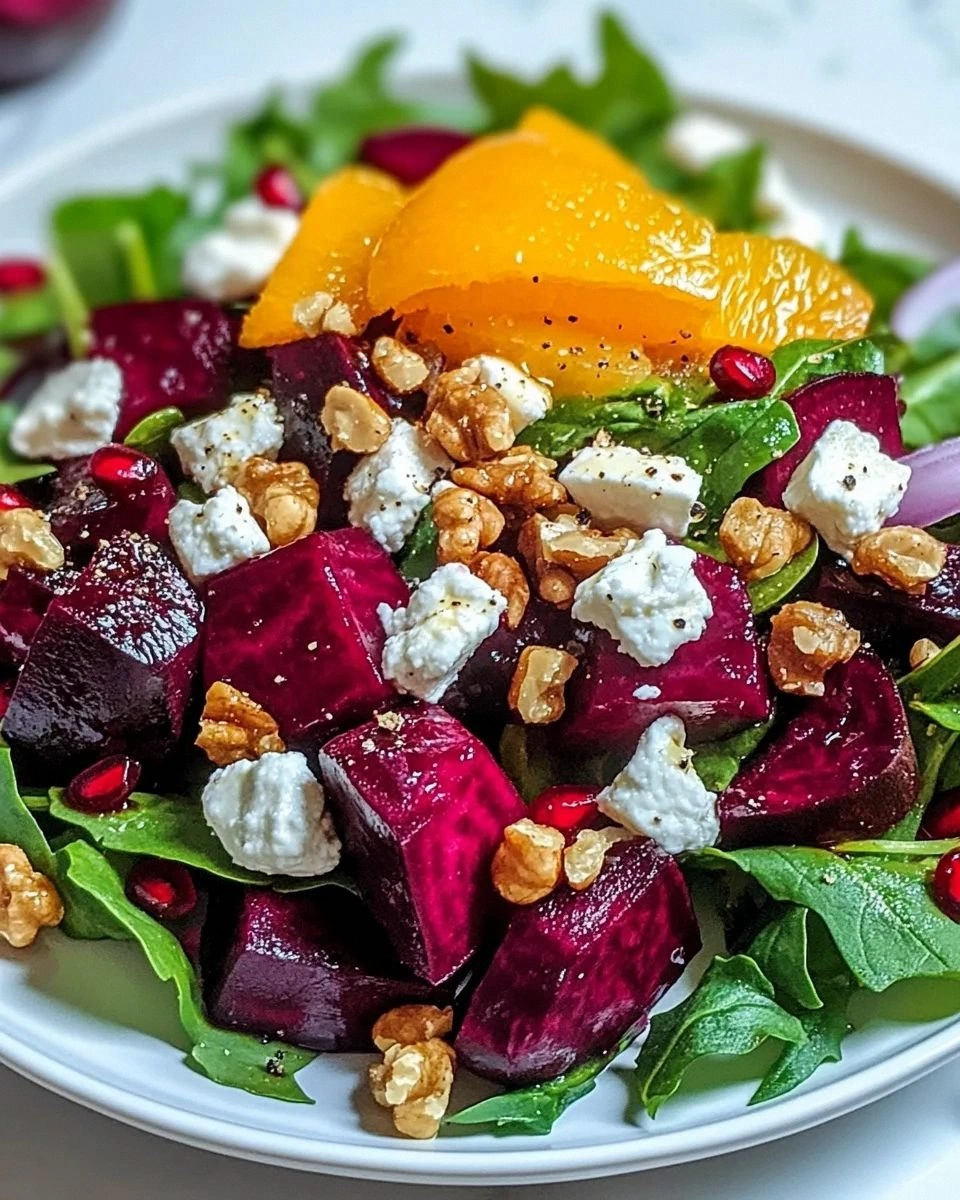
Transfer the salad to a serving platter, arranging it so the colors pop—deep magenta beets, vivid green arugula, ivory goat cheese, and amber walnuts. Serve immediately, or let it rest for 10 minutes to let the flavors meld further. Either way, you’re about to experience a bite that feels like a celebration in your mouth.
That's it — you did it. But hold on, I've got a few more tricks that'll take this to another level, from plating finesse to a secret garnish that will make your guests gasp.
Insider Tricks for Flawless Results
The Temperature Rule Nobody Follows
Never toss a hot salad with cold greens. The warmth of the beets helps release the natural oils in the arugula, creating a harmonious blend. I once tried the opposite and ended up with wilted leaves that looked sad. Keep the beets slightly warm, and the greens will stay crisp, giving you that perfect bite.
Why Your Nose Knows Best
Before you even taste the salad, give it a good sniff. The aroma of toasted walnuts and smoked salt should be the first thing that hits you. If you can’t detect that nutty fragrance, the walnuts probably need a few more seconds in the pan. Trust your nose; it’s the fastest quality control.
The 5‑Minute Rest That Changes Everything
Allow the assembled salad to sit for exactly five minutes before serving. This short rest lets the vinaigrette fully penetrate the beet cubes, turning each bite into a flavor‑burst explosion. I once served it straight away and the dressing felt thin; after the rest, it clings like a silk scarf.
Balancing Sweet and Acid
If the salad leans too sweet, a splash of extra balsamic or a pinch of lemon zest will brighten it. Conversely, if the acidity is too sharp, a drizzle of honey or a few extra walnut pieces will round it out. Adjusting on the fly keeps the flavor profile dynamic and prevents it from becoming one‑dimensional.
Presentation Perfection
When plating, use a wide, shallow bowl or a rustic wooden board. Arrange the beets in a fan shape, sprinkle the goat cheese over the top, and finish with a drizzle of vinaigrette in a zig‑zag pattern. The visual contrast makes the salad look as good as it tastes, and people eat with their eyes first.
Creative Twists and Variations
This recipe is a playground. Here are some of my favorite ways to switch things up:
Beet‑Orange Fusion
Swap half the beets for blood orange segments. The citrus adds a bright, tangy pop that lifts the earthiness. Perfect for a summer brunch where you want a burst of sunshine.
Nut‑Free Delight
Replace walnuts with toasted pumpkin seeds for a nut‑allergy‑friendly version. The seeds bring a similar crunch and a slightly sweeter flavor, making the salad accessible to everyone.
Vegan Velvet
Omit the goat cheese and replace it with a crumble of marinated tofu or a dollop of cashew “cheese.” The creamy texture remains, and the dish stays entirely plant‑based without losing its indulgent feel.
Spicy Kick
Add a pinch of smoked paprika or a drizzle of sriracha‑infused olive oil. The heat pairs surprisingly well with the beet’s sweetness, creating a sweet‑heat balance that’s addictive.
Grain‑Boosted Bowl
Mix in cooked quinoa or farro for extra body. The grains absorb the vinaigrette, turning the salad into a hearty main course that can stand up to a protein like grilled chicken or salmon.
Herb‑Infused Elegance
Stir in a handful of fresh mint or basil just before serving. The herbaceous notes add a fresh lift, making the salad feel lighter and more aromatic.
Storing and Bringing It Back to Life
Fridge Storage
Place the roasted beets in an airtight container and keep the vinaigrette separate. The salad stays fresh for up to 4 days, with the greens staying crisp and the beets retaining their flavor. When ready to serve, simply toss everything together.
Freezer Friendly
While fresh greens don’t freeze well, you can freeze the roasted beet cubes. Spread them on a tray, freeze until solid, then transfer to a zip‑lock bag. They’ll keep for up to 3 months. Thaw in the refrigerator, then re‑assemble with fresh arugula and dressing.
Best Reheating Method
If you prefer a warm salad, gently reheat the beet cubes in a skillet over low heat for 2‑3 minutes, adding a tiny splash of water to steam them back to perfection. This prevents drying and revives the natural sweetness.